
Everything You Need to Know About 1x Drivetrain Systems

While most bikes once came equipped with front derailleurs and two or three chainrings, single chainring (1x) bikes have steadily taken the lead in trends. These bikes eliminate the front derailleur entirely, along with the shifter and cable for it, since there’s only one chainring up front. The 1x system isn’t new—many riders have been running 1x setups for years, often pairing them with chain guides and cobbling together parts for optimal performance. Fortunately, 1x drivetrains are now mainstream, with readily available dedicated components—no more mix-and-match required.
SRAM pioneered the dedicated 1x groupset, launching the XX1 mountain bike kit in 2012 as a 1×11 system. They followed up in 2016 with the 12-speed Eagle lineup. Since then, more manufacturers have jumped on board with their own offerings. In this guide, we’ll explore the components of 1x drivetrains, their applications across different bike types, and a balanced look at the pros and cons.
1. What Is a 1x Drivetrain?
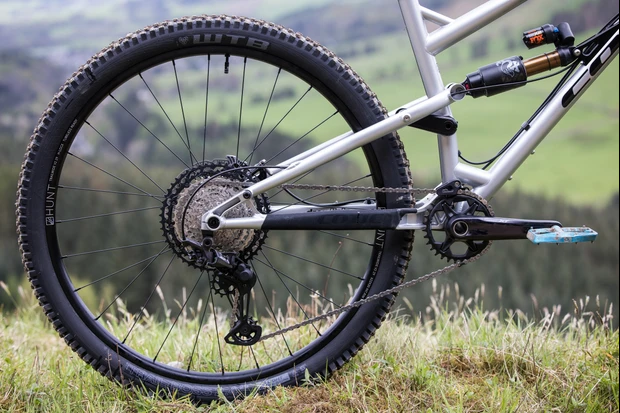
A 1x (single chainring) drivetrain, as the name suggests, features just one chainring mounted on the crankset—no front derailleur. In contrast, 2x (double) or 3x (triple) systems use multiple chainrings upfront for a wider gear range and closer ratios between gears, making pedaling smoother and easier to manage.
With proper use, shifting becomes straightforward. The smaller chainring in a 2x setup is typically used for climbing, providing easier gears where 1x can fall short. To compensate for the narrower range of a single chainring, most 1x bikes use cassettes with more cogs, featuring a much smaller smallest cog and a much larger biggest one for suitable gears on both climbs and descents.
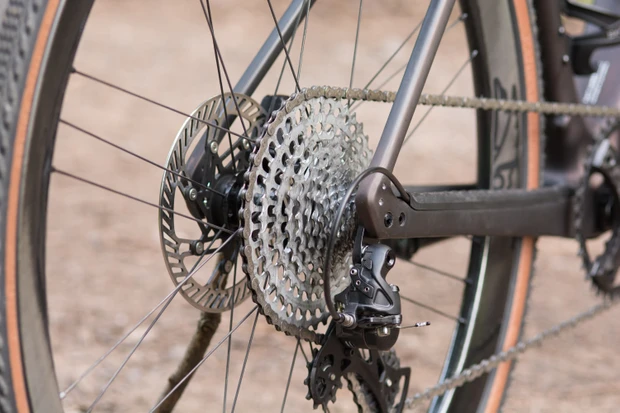
Many 1x chainrings feature alternating wide-narrow tooth profiles to prevent chain drops on rough terrain, reducing the risk of the chain falling off, jamming between the chainring and frame, or slapping components. The rear derailleur often includes a clutch mechanism to maintain chain tension, minimize noise, and keep the ride quieter.
2. 1x Drivetrains on Mountain Bikes, Gravel Bikes, Road Bikes, and More
2.1 Mountain Bikes
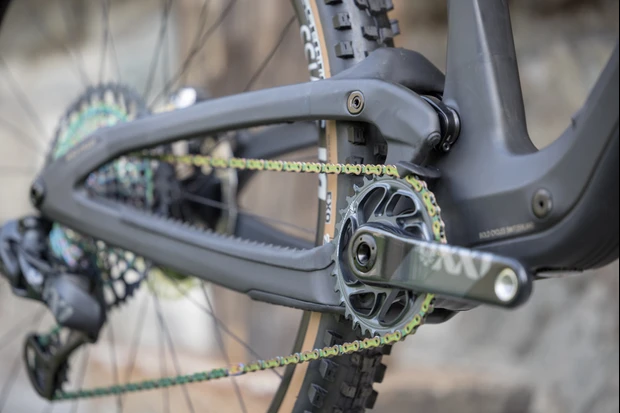
Most modern mountain bikes now run 1x drivetrains. Although 1x only became common on high-end MTBs in recent years, SRAM introduced it in October 2012 with the 1×11 XX1 groupset, followed by the 12-speed Eagle in March 2016. Today, many mountain bike frames are designed exclusively for 1x. Removing the front derailleur frees up space for creative frame engineering, especially in rear suspension layouts. Pivot placement becomes more flexible, allowing wider stances for better smoothness and durability. With a narrower chainstay range to accommodate, suspension kinematics improve with fewer compromises.
SRAM has phased out double chainring mountain groupsets entirely, while Shimano still offers front derailleur options. Lower-end models often retain 2x or 3x setups.
2.2 Gravel Bikes
For gravel bikes, ditching the front derailleur brings numerous benefits. Most high-end gravel bikes now feature 1x groupsets. SRAM’s Force CX1 (and the wireless XPLR eTap AXS) fits most gravel frames, while Shimano launched its dedicated gravel lineup, GRX, in 2019—with both 1x and 2x options. Campagnolo was the last of the big three to enter with its 13-speed Ekar in 2020, emphasizing its extra gear.
Some gravel frames are 1x-only, while others remain flexible. The choice depends on riding style and terrain. For smoother roads where riders want finer gear steps to maintain cadence, 2x may be better. On technical, bumpy routes with higher mechanical risk, the simplicity and chain security of 1x shine.
2.3 Road Bikes
Road bikes still predominantly use 2x drivetrains, as the multiple chainrings provide far more gear options to handle varied gradients. Gear variety takes priority over simplicity here. Teams like Water Blue experimented with 1x road bikes (e.g., 3T Strada), but results were limited—though they had highlights like a stage win at the Vuelta. Recently, riders have opted for 1x in flat or cobbled classics, such as Lizzie Deignan’s dramatic 2021 Paris-Roubaix victory.
On flat time trials or triathlons, 1x appears for its simplicity, sometimes with aero-optimized chainrings.
2.4 Other Types
Many e-bikes use 1x for clean, efficient setups—especially commuters that don’t tackle extreme terrain. In full-power scenarios, 1x keeps things simple. Some adventure/rough-road bikes favor 1x for mud resistance (no front derailleur to clog). On pure e-bikes, larger motors often leave no room for a front derailleur.
3. Advantages of 1x Drivetrains
1x systems offer five main benefits: simplicity, reduced weight, easier maintenance, better frame design freedom, and lower cost.
Simplicity — Only one shifter handles all gears—no front shifting means half the work. It eliminates redundant ratios common in 2x/3x setups (e.g., in a typical 50/34 × 11-28 road setup, many of the 22 “speeds” overlap or are nearly identical, leaving fewer truly distinct options). Fewer parts also mean fewer future replacements.
Weight Reduction — No second chainring, front derailleur, shifter, or cables saves grams. Clutch-equipped rear derailleurs add some weight back, and wide-range cassettes can offset gains, so net savings vary.
Easier Maintenance — Only one derailleur to adjust—no more finicky front derailleur tuning or chain rub issues. In off-road conditions, front derailleurs are mud magnets; 1x eliminates that hassle.
Frame Design Freedom — Multiple chainrings constrain crank and bottom bracket placement, limiting tire clearance, comfort, and suspension innovation. 1x opens up possibilities for better wheel/tire fit, ride quality, and damping.
Lower Cost — Fewer components translate to savings. For example, a Shimano GRX 810 1x groupset retails around 999 EUR vs. 1049 EUR for 2x; SRAM Red eTap AXS 1x is about 1978 EUR vs. 2423 EUR for 2x.
4. Disadvantages of 1x Drivetrains
Despite the upsides, 1x has drawbacks like larger gear jumps and component wear.
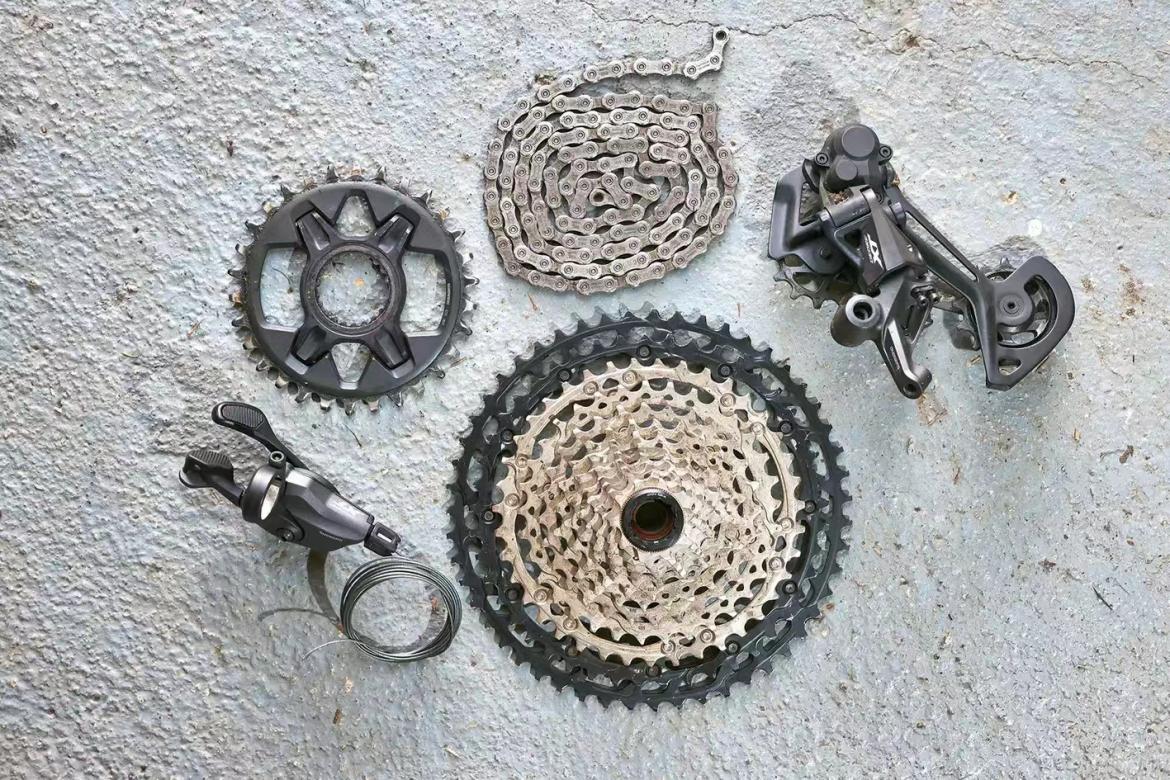
Gear Jumps — With roughly half the ratios of a 2x but needing similar overall range, cassettes grow huge (e.g., SRAM Eagle 10-52T or Shimano 10-51T, ratios over 500%). Even with a well-chosen chainring, shifts produce bigger jumps, disrupting cadence—fine off-road, but challenging in packs or on smooth roads.
Power Loss — Extreme chain angles (especially on big cogs) increase friction and reduce efficiency. Testing by VeloNews and CeramicSpeed showed average losses of 12.24 watts for 1x vs. 9.45 watts for 2x—nearly 3 watts difference, significant at pro levels.
Component Wear — Greater chain articulation accelerates wear on chain, cassette, and chainring. Timely chain replacement is crucial, as worn chains destroy expensive wide-range cassettes faster.
Freehub Compatibility — Tiny smallest cogs (10T or even 9T) require new freehub bodies. Traditional Shimano/SRAM or Campagnolo standards top out at 11T; manufacturers are developing wider options for modern 1x.
5. Which One Should You Choose?
It comes down to your riding needs and terrain. If you value simplicity, easy maintenance, and lighter setups, 1x is ideal. If you prioritize dense gear spacing for consistent cadence without big jumps or heavy/light pedaling, 2x wins.
6. How to Go 1x
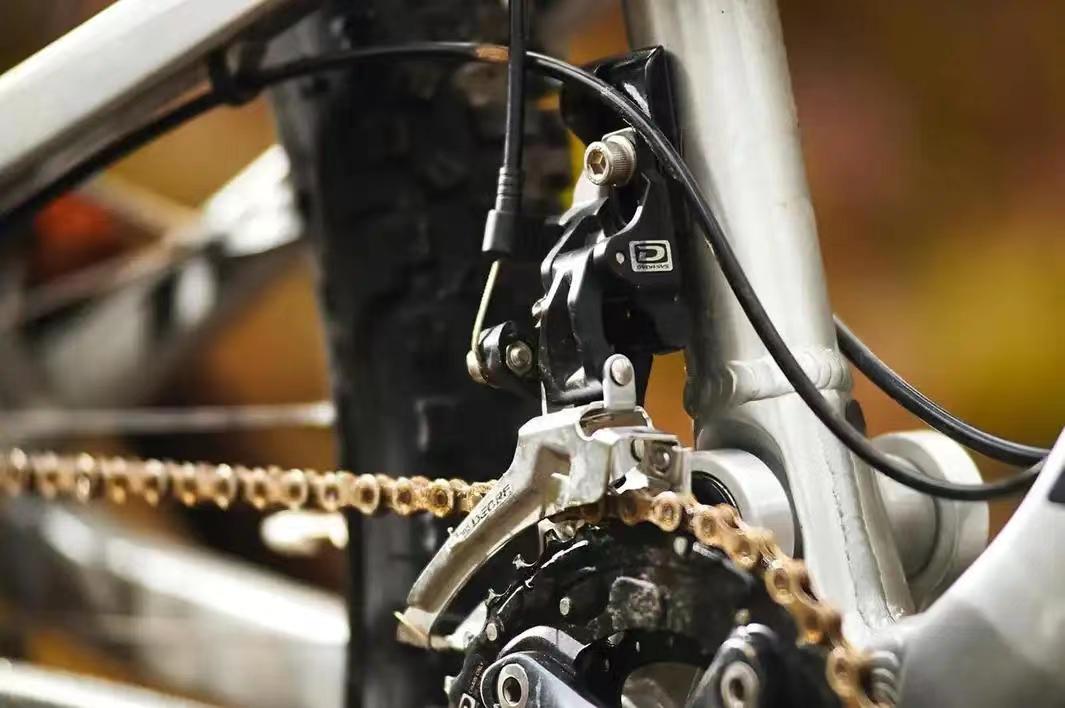
Buy a complete 1x groupset, or convert your existing setup: remove the front derailleur and shifter, install a suitable (preferably narrow-wide) chainring, and add a chain guide to prevent drops and frame contact. Upgrade to a clutch rear derailleur for best results.


Leave A Comment