Deep Dive Into Carbon Fiber Bicycle Frame Manufacturing Technologies and Processes
Carbon fiber technology has undoubtedly dominated the evolution of modern bicycles. When you examine those premium carbon fiber bikes with high price tags, you will always encounter brands promoting their proprietary materials and manufacturing methods using complex marketing terminology. As a professional carbon fiber bicycle manufacturer, ICANBIKES has always maintained a transparent perspective: beyond the vague marketing language, the underlying raw materials and core molding technologies used by top-tier brands are actually very similar within today’s highly mature global supply chain.
So why can the same materials produce frames with completely different riding characteristics? ICANBIKES believes the soul of a great bicycle never comes from marketing buzzwords. Instead, it comes from engineers meticulously optimizing every carbon fiber layer orientation, accurately calculating stress distribution, and continuously refining frame geometry. This is exactly how the same raw materials can be transformed into frames with distinct ride qualities and unique riding styles.
The differences between carbon fiber bicycle frames are created through more sophisticated design, testing, proper material selection, layup strategies, manufacturing consistency, and quality control. These factors also directly influence the final cost of the frame.
So how exactly does carbon fiber become a bicycle frame step by step? What technologies and processes are involved in manufacturing? What common misconceptions still exist? And if manufacturers often use similar materials, why can one frame still outperform another?
What Is Carbon Fiber?
Before diving deeper into how carbon fiber frames are manufactured, we should first understand the raw material itself. This also helps explain professional terms commonly used by manufacturers, such as 3K, 6K, and high modulus carbon fiber.
Carbon fiber is essentially a polymer that undergoes multiple heating and treatment processes to form long chains of carbon atoms. These ultra-thin carbon filaments typically measure around 5–10 microns in diameter, making them 10–20 times thinner than human hair. These tiny filaments are then bundled together into ribbons or tows for practical use. You can think of this process like twisting strands into a rope — individual carbon filaments become a stronger and lighter carbon bundle.
The number of carbon filaments within each tow is the measurement unit most commonly seen in the bicycle industry, usually represented by “K” (thousand). For example, a tow containing 3,000 filaments is called 3K carbon fiber, while one containing 6,000 filaments is called 6K.
The strength and stiffness of individual carbon filaments can also vary, which brings us to the concept of modulus. Through more refined processing, manufacturers can create smoother and thinner filaments. These thinner filaments can pack together more tightly, increasing the stiffness of the overall tow. However, higher modulus fibers also tend to become more brittle because each filament becomes thinner.
Although modulus is frequently used as a marketing term in carbon fiber frame promotion, it is not a standardized unit within the bicycle industry. For example, one brand’s “high modulus” carbon may only be equivalent to another brand’s “mid-level modulus” material. More importantly, the best carbon frames are never built using just one type of carbon fiber. Instead, they rely on carefully engineered combinations of multiple modulus levels.
From Carbon Fiber to Composite Materials
Carbon fiber tows themselves are almost useless in their raw state. At this stage, they are simply dry and flexible materials. Carbon fiber only becomes functional when combined with other materials. This leads to another common misunderstanding: bicycle frames are more accurately described as composite materials or laminates.
To build bicycle frames, carbon fiber must be bonded together using adhesives, most commonly epoxy resin. This process transforms carbon fiber into a composite material, or more precisely in engineering terms, Carbon Fiber Reinforced Polymer (CFRP). Since these materials are layered together, they are also commonly referred to as laminates.
Compared with the lightweight strength of carbon fiber, resin is actually heavier and weaker. Therefore, the goal during manufacturing is to use as little resin as possible while still effectively bonding the carbon layers together. This is where high modulus carbon fiber provides another advantage: because the gaps between fibers are smaller, less resin is required for bonding, contributing to lower frame weight.
Some manufacturers further modify resin systems by adding materials such as fiberglass fibers or carbon nanotubes (extremely fine carbon fibers) to alter structural characteristics and improve performance.
During carbon frame manufacturing, one of the most common materials used is pre-preg carbon fiber, also known as prepreg. This refers to carbon fiber sheets pre-impregnated with resin but not yet cured. The sheets are backed with release paper and transported in rolls. These materials are typically stored in refrigerated environments and heated before use to activate the resin. The advantage of prepreg is its highly consistent resin distribution, which improves quality control and reduces manufacturing time.
In most cases, prepreg uses unidirectional (UD) carbon fiber, where all fibers run parallel in one direction. This provides maximum stiffness and strength along that specific axis but sacrifices strength in perpendicular directions. Another option involves woven carbon fiber, where fiber bundles are interlaced in multiple directions, providing more balanced stiffness and strength characteristics.
Unidirectional prepreg offers excellent directional control and allows engineers to place carbon fibers precisely at specific angles. This is especially useful in complex frame sections or lower-load areas such as head tube junctions, seat tube intersections, bottom bracket shells, bottle cage mounts, and internal cable routing ports. Another advantage of woven carbon is improved bonding performance, reduced delamination risk, and greater damage tolerance.
Although prepreg dominates the bicycle industry, not all brands rely exclusively on it. Regardless of manufacturing method, engineers must carefully balance multiple variables to ensure the correct carbon fiber types and resin systems are applied in the correct locations and orientations. This determines frame stiffness, brittleness, weight, durability, impact resistance, and of course, production cost.
Overall, carbon fiber frame design remains highly flexible. When engineered correctly, carbon fiber frames can theoretically have an extremely long service life.
Overview of the Design Process
Designing a bicycle frame is far from simple, so this section only provides a general overview. Regardless of brand or model, the process is highly complex and varies significantly between manufacturers.
The first step is defining the intended purpose of the frame. After that, long-term performance targets are established.
Another major advancement in carbon fiber frame development comes from improved manufacturing consistency. Although carbon fiber grades themselves have improved over the years, even more important are advancements in compaction and molding technologies, which now exceed what theoretical material properties alone can achieve.
More uniform compaction reduces defects and improves structural performance. Better laminate consistency and optimized layup structures allow manufacturers to build lighter, stronger, and more fatigue-resistant frames without relying on excessive material redundancy for safety margins.
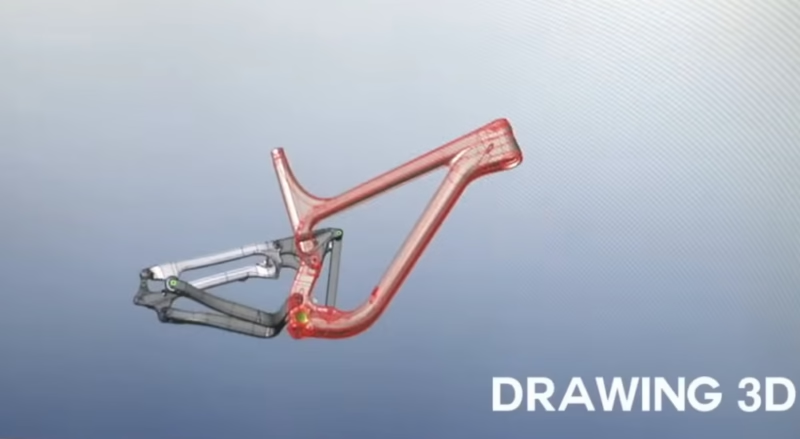
Once the design concepts are finalized, digital modeling becomes critical. Engineers typically use advanced design tools such as 3D FEA (Finite Element Analysis) and CFD (Computational Fluid Dynamics) for aerodynamic analysis and testing. At this stage, decisions may also be made regarding frame separation points during construction, material selection, preforming methods, and tooling directions.
Building a fully functional prototype at the early stage can be both time-consuming and expensive. Some brands first create 3D-printed prototype parts to test assembly, aesthetics, and manufacturing feasibility.
Computer-aided design significantly shortens development cycles and provides early insight into overall frame performance. Once this stage is completed, mold development begins and detailed layup schedules are created for every individual carbon fiber piece.
Common Carbon Fiber Bike Frame Manufacturing Methods Monocoque Construction
“Monocoque” is one of the most commonly used marketing terms in the carbon fiber bicycle industry. From the name itself, it refers to a structure where the frame shell handles loads and stresses directly.
However, true monocoque road bike frames are actually very rare. In most cases, manufacturers produce only the front triangle as a monocoque structure, while the seat stays, chain stays, and sometimes even certain tube sections are manufactured separately and later assembled together. Technically, these should be called semi-monocoque or modular monocoque structures, which are currently the most common methods in the bicycle industry.
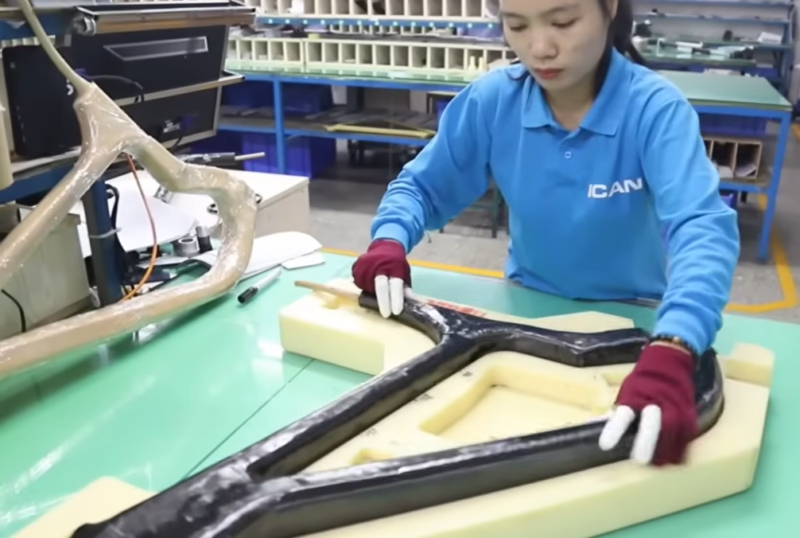
Regardless of terminology, the process begins by cutting large prepreg sheets into individual carbon pieces. Every piece has a specific location and orientation defined in the layup manual. You can think of it like assembling a complex puzzle where each carbon layer is numbered and positioned precisely.
Many people claim carbon fiber itself is inexpensive because raw carbon fiber and resin materials can easily be purchased online at relatively low prices. While that may be true, the real cost comes from the labor-intensive layup process. A single frame requires numerous prepreg layers carefully placed by hand in a precise sequence according to engineering specifications.
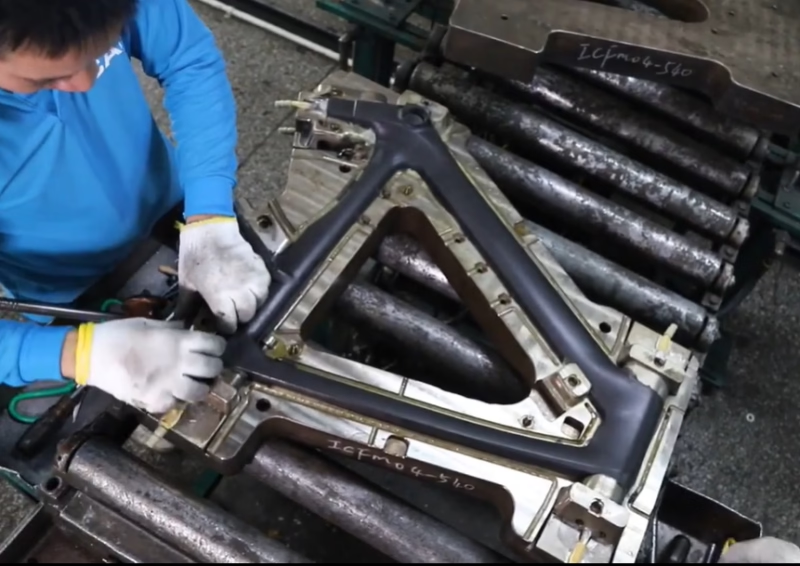
For complex areas such as head tubes, manufacturers often first apply carbon layers onto preformed components before transferring them into the main mold assembly. The molds themselves are usually made from steel or aluminum and are reusable. These molds determine the external shape and appearance of the frame.
However, the exterior shape is only part of the process. Internal pressure must also be applied during molding to eliminate voids between carbon layers. Several technologies are used for this purpose:
- Internal air bladders
- Dissolvable foam or wax cores
- Flexible silicone mandrels
- Rigid plastic or metal internal molds
In high-end mass production, semi-cured frame sections are often positioned around inflatable bladders with mesh reinforcement inside the mold. Once all components are placed correctly, the second half of the mold is sealed and locked.
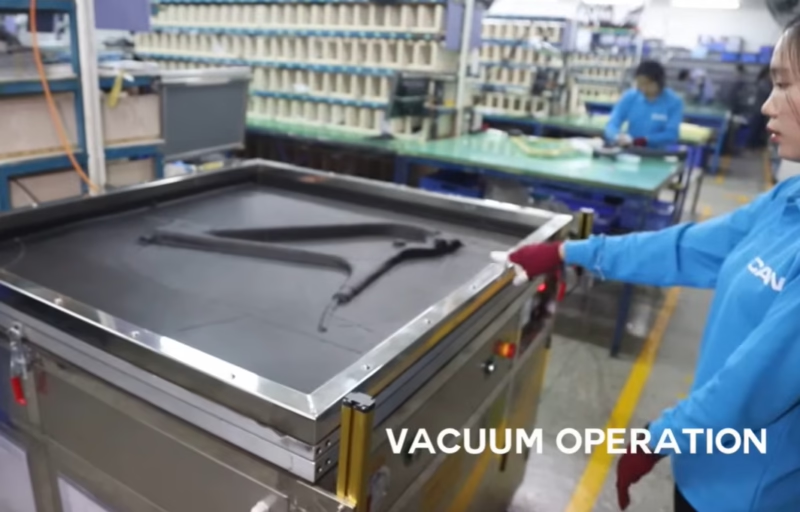
The entire mold is then vacuum-bagged and evacuated to remove as much air as possible before curing. Heat is applied during this stage to allow the resin to flow evenly, while internal bladder pressure compresses the carbon laminate tightly, eliminating air pockets and excess resin.
After curing, the frame is removed from the mold and all internal bladders or mandrels are extracted. Components such as dropouts, seat stays, and chain stays are then bonded onto the frame. These joints are wrapped again with additional carbon fiber for structural reinforcement and smooth surface finishing. Assembly is performed using precision fixtures to ensure perfect alignment.
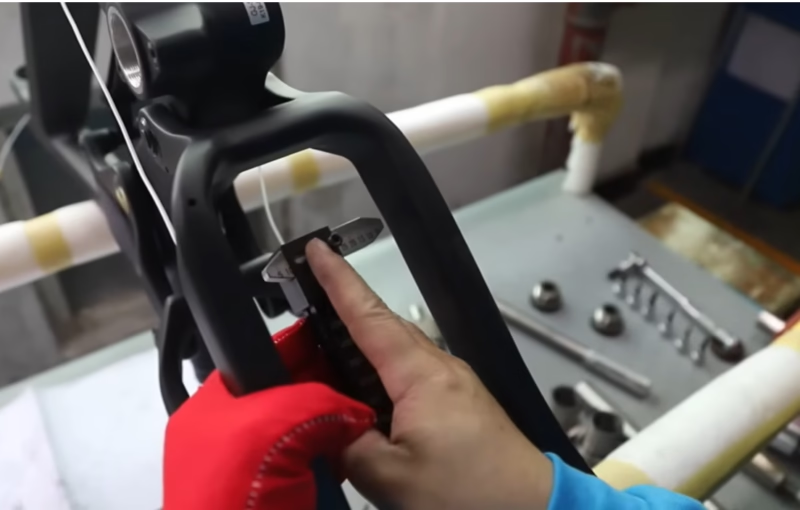
At this stage, the structure finally resembles a complete bicycle frame. The remaining steps involve sanding, finishing, and painting.
Overall, transforming raw carbon filaments into a complete carbon frame is an extremely time-consuming process. Monocoque construction allows manufacturers to create strong and lightweight products using minimal material. Combined with the highly tunable mechanical properties of carbon fiber, monocoque construction remains the preferred choice for achieving exceptional stiffness-to-weight ratios.
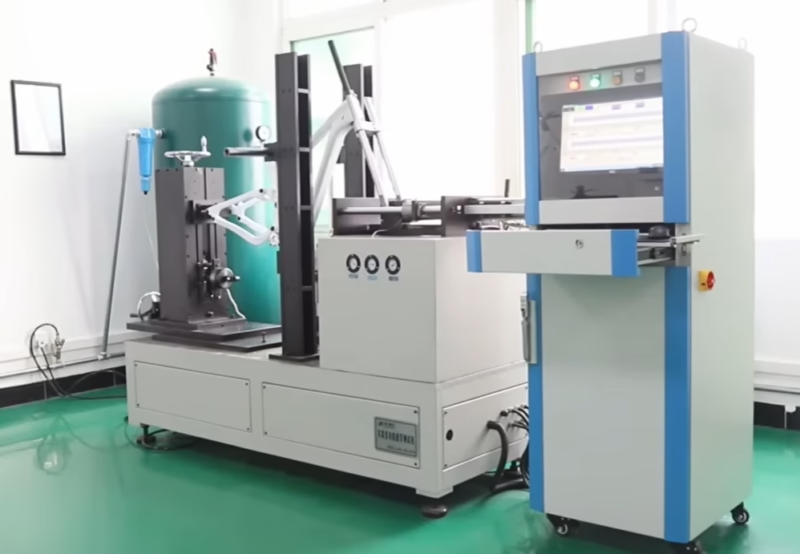
However, monocoque manufacturing is expensive and lacks flexibility. As mentioned earlier, the process requires significant labor, tooling investment, and long production cycles. This is one reason why many carbon bicycle manufacturers establish factories in labor-intensive regions.
Another major cost factor is tooling. Every frame size requires its own dedicated mold. If a frame platform includes 12 frame sizes and multiple fork sizes, tooling expenses become enormous.
For small brands and custom builders, such manufacturing costs are often difficult to justify. Even major brands typically maintain product cycles lasting two to three years in order to recover development investments.
Tube-to-Tube Construction(Another manufacturing process)
For custom carbon fiber frame builders, developing a market-competitive monocoque frame can be extremely difficult due to the reasons mentioned above. As a result, many manufacturers turn to another production method: tube-to-tube construction.
Conceptually, this process is very similar to welding steel, titanium, or aluminum frames.
Each carbon tube is manufactured separately, and in some cases sourced directly from specialized carbon tubing suppliers. This approach significantly lowers manufacturing barriers while still allowing highly precise control over geometry, stiffness, and ride characteristics. The selected carbon tubes largely determine frame performance, while tube lengths define frame geometry.
The cut carbon tubes are positioned within alignment fixtures for bonding. Typically, one carbon tube inserts into another, while prepreg carbon fiber is wrapped externally around the joint for reinforcement.
More advanced manufacturing methods may place the assembled frame into vacuum bags or rigid/flexible molds for additional compaction, while lower-end processes may simply allow the resin to cure naturally before proceeding.
Tube-to-tube construction enables highly customized geometries efficiently, but it requires exceptional craftsmanship to guarantee structural safety. Additionally, this method generally involves greater material redundancy compared with monocoque construction.
Lugged Construction
Lugged carbon construction is very similar to tube-to-tube manufacturing. Carbon tubes are connected using prefabricated lugs instead of directly inserting tubes into one another. Manufacturers produce lugs in various specifications and bond them together with carbon tubes to form a complete frame.
This process resembles traditional steel lugged brazing techniques.
However, just like tube-to-tube construction, lugged carbon frames inherently contain more overlapping materials compared with monocoque structures, resulting in lower stiffness-to-weight efficiency.
Conclusion
Even today, carbon fiber bicycle frames still require extensive hands-on craftsmanship. From a long-term perspective, the fundamental manufacturing principles of carbon bicycle production have not changed dramatically over the years. However, if you look deeper, enormous progress has been achieved in quality control, consistency, compaction technology, and process optimization.
No matter how a carbon frame appears externally, one thing remains certain: its true performance goes far beyond what is visible on the surface.
As a professional carbon fiber bicycle manufacturer, ICANBIKES has remained deeply focused on carbon bicycle manufacturing for years, continuously refining carbon frame engineering, aerodynamic development, and advanced composite production technologies. For global B2B customers, the real value of a carbon fiber bike manufacturing partner goes far beyond simple production capacity. It includes stable quality control systems, scalable OEM/ODM capabilities, engineering support, certification compliance, and long-term supply chain reliability.
ICANBIKES provides comprehensive OEM/ODM solutions for brands seeking to develop competitive carbon fiber bicycles and components that comply with international performance standards and UCI requirements. The company manufactures a full range of carbon fiber bike products, including carbon bike frames, carbon bike wheelsets, carbon rims for bike, carbon bike forks, and carbon bike handlebars to meet the evolving demands of the global cycling market.
All products are manufactured under strict quality management systems and have passed SGS and EN testing standards, helping cycling brands worldwide bring reliable, high-performance carbon fiber products to market efficiently and competitively.