In the cycling community, many beginners struggle to understand the conceptual differences between a road bike and a gravel bike. The confusion is understandable—gravel bikes share many similarities with modern road bikes. Today, mainstream road bike designs and gravel bike concepts overlap in several areas, such as versatile frame designs, the popularization of disc brakes, increased tire clearance, and more comfortable geometries.
However, despite these similarities, road bikes and gravel bikes are fundamentally different machines designed for different purposes.

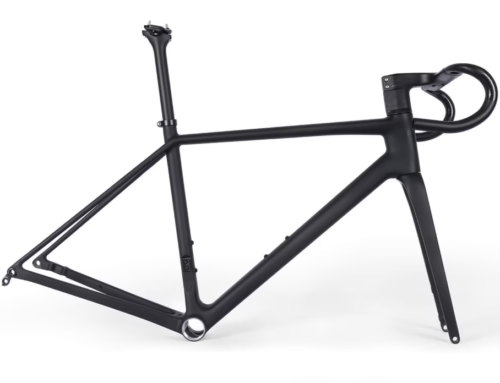
What is a Road Bike?
Best For: Sports, competitive racing, and fast commuting.
Key Features:
-
Large wheel diameter with thin, narrow tires.
-
Lightweight construction with low rolling resistance for maximum speed.
Drawbacks:
-
Low load-carrying capacity.
-
Insufficient tire grip on loose surfaces.
-
Highly vulnerable to complex terrains (e.g., uneven roads, drainage grooves, wet surfaces), leading to a high risk of punctures and low passability.
-
Aggressive riding posture, which offers lower overall comfort on long, casual rides.
Main Types of Road Bikes:
-
Climbing Bikes: Characterized by their lightweight build, high stiffness, and excellent handling. This is the most common type of road bike.
-
Aero Bikes (Aerodynamic): Designed for flat-road sprinting, minimizing air resistance during high-speed riding.
-
Endurance Bikes: Built for long-distance rides, featuring a comfortable geometric design that allows the rider to sit in a more relaxed position and ride further.
-
Cyclocross (CX) Bikes: Built for short, intense races on mud and gravel, often featuring specific shock-absorption designs and mud clearance.
-
Time Trial (TT) / Triathlon Bikes: Engineered for time trials and triathlons, featuring exaggerated aerodynamic designs to pursue absolute maximum speed.
Road Bike & Flat Bar Bike Sizing Guide
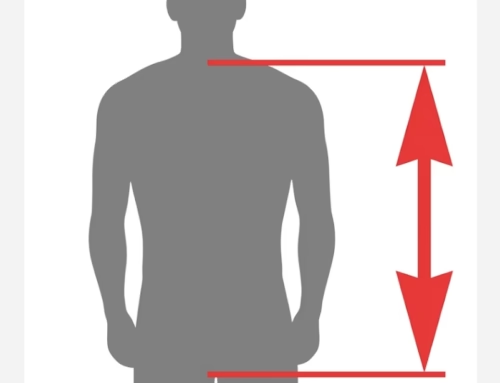
Below are the sizing reference charts based on rider height, converted into an easy-to-read format.
| Height (CM) | Wheel Size | Seat Tube Size (CM) |
|---|---|---|
| 150CM - 160CM | 700C | 46CM |
| 155CM - 170CM | 700C | 47CM |
| 160CM - 170CM | 700C | 48CM |
| 170CM - 180CM | 700C | 50CM |
| 180CM - 190CM | 700C | 52CM |
| Height (CM) | Wheel Size | Seat Tube Size (CM) |
|---|---|---|
| 160CM - 170CM | 700C | 44CM |
| 165CM - 175CM | 700C | 45CM |
| 170CM - 180CM | 700C | 46CM |
| 170CM - 180CM | 700C | 47CM |
| 180CM - 190CM | 700C | 48CM |
| 180CM - 190CM | 700C | 49CM |
What is a Gravel Bike?

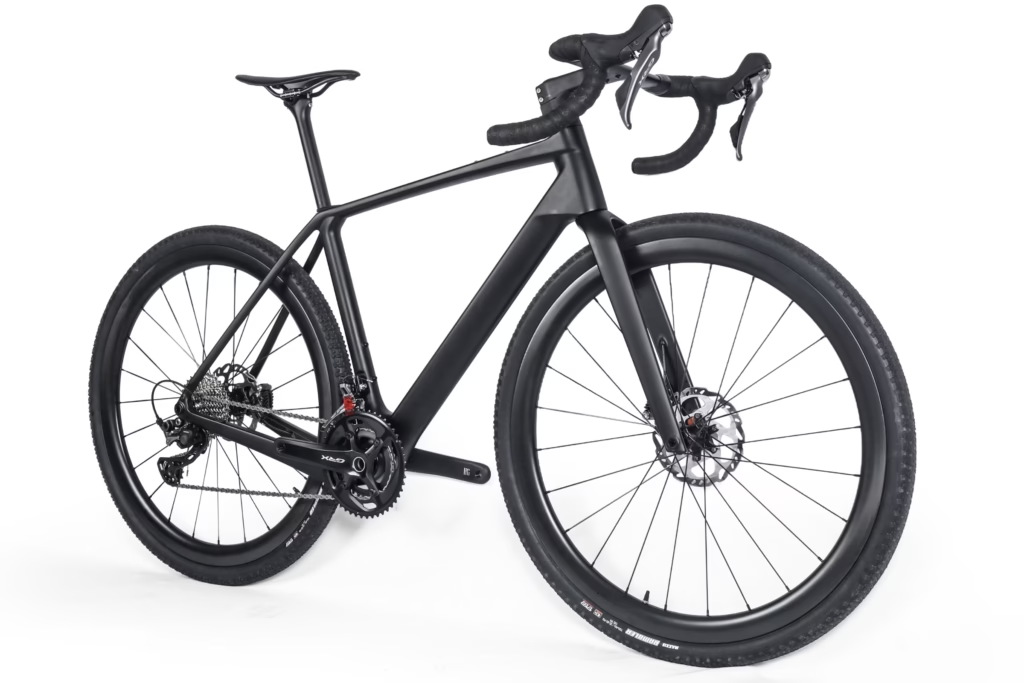
Many road cyclists are frustrated by how easily road tires puncture. Gravel bikes completely eliminate this pain point. As the name suggests, these bikes are built to conquer sand, gravel, and crushed stone. Often affectionately referred to as the “monsters of the road,” gravel bikes use wider knobby tires to navigate complex terrains and provide superior passability.
While this capability decreases their top speed on paved roads, gravel bikes are incredibly versatile. You can easily swap out the knobby tires for a set of slick road tires. A gravel bike can fit road tires, but a road bike rarely has the clearance to fit gravel tires.
Best For: Sports, racing, and commuting across varied terrains (paved roads, forest trails, industrial paths, and alpine dirt roads).
Key Features:
-
Large wheel diameter with wide tires.
-
Weight and speed that sit comfortably right between a mountain bike and a road bike.
-
High compatibility: fits both knobby off-road tires and slick road tires.
-
Exceptional passability, comfort, functionality, and stability.
-
Relaxed frame geometry for a more upright and comfortable riding posture.
Drawbacks:
-
Generally heavier than traditional drop-bar road bikes.
Key Differences: How to Distinguish a Gravel Bike from a Road Bike
The creation of the gravel bike provided riders with unmatched functionality and versatility. Compared to road bikes, they differ significantly in tires, drivetrains, geometry, comfort, weight, and accessories.
-
Tires: Gravel bikes use much wider knobby tires for better grip and passability on rough surfaces, making them slightly slower on pavement. Many gravel riders will buy a spare set of road tires for their gravel bike.
-
Drivetrain (Gearing): Gravel bikes typically utilize a 1x (single chainring) setup with a much larger rear cassette for simplified shifting on bumpy terrain. Road bikes almost universally use a 2x (double chainring) setup.
-
Geometry: Road bike frames have lower head tubes and aerodynamic tube shapes to minimize weight and drag. Gravel bike geometry is less aggressive, featuring a taller head tube for a more relaxed, upright posture.
-
Comfort: Road bikes prioritize low wind resistance and high speed over comfort. Gravel bikes prioritize compliance, featuring frames that are intentionally less rigid to absorb trail vibrations.
-
Weight: Because gravel bikes must endure harsh, complex road conditions, their frames are built with higher strength and wider tire clearances. Consequently, gravel frames are heavier than road frames.
-
Accessories & Mounts: The drop handlebars on gravel bikes usually feature an outward “flare.” This increases aerodynamic drag but drastically improves handling and control off-road. Furthermore, gravel bikes are built for utility; they feature numerous extra mounting points on the top tube, seat tube, down tube, fork, and chainstays to easily attach bikepacking bags, cargo racks, and fenders for long-distance touring.
FAQs
Q1: Can I put road tires on a gravel bike?
Yes. Gravel bikes have wide frame clearance, allowing you to easily install slick, narrow road tires if you want to ride faster on paved roads.
Q2: Can I put gravel tires on a road bike?
Usually, no. Traditional road bikes have very tight frame and fork clearances designed for narrow tires. Wide, knobby gravel tires simply will not fit.
Q3: Is a gravel bike significantly slower than a road bike?
On smooth pavement, yes. The wider knobby tires, heavier frame, and less aerodynamic riding position create more rolling and wind resistance. However, on dirt or broken roads, a gravel bike will be much faster and safer.
Q4: Why do gravel bikes usually have a 1x (single chainring) drivetrain?
A single chainring simplifies shifting, reduces the chance of dropping a chain on bumpy terrain, and leaves more room in the frame design for wider tires and mud clearance.
Q5: What does “flared handlebars” mean on a gravel bike?
Flared handlebars mean the lower part of the drop bars angles outward. This gives the rider a wider, more stable stance, offering better leverage and control when navigating tricky off-road descents.
Q6: Which bike is better for city commuting?
If your commute is entirely on smooth, well-paved roads and you want to get there fast, a road bike is ideal. If your city has potholes, uneven pavement, or paths through parks, a gravel bike offers a much more comfortable and puncture-resistant commute.
Q7: Are gravel bikes suitable for absolute beginners?
Absolutely. In fact, they are often better for beginners than road bikes. Their relaxed, upright geometry is easier on the back and neck, and their wider tires provide superior stability and confidence for new riders.