What Do Rim Depth and Spoke Count Actually Affect on Carbon Wheels?
When looking at carbon fiber wheelsets, terms like “50mm rim depth” or “24 spokes” can be confusing. Think of these parameters like “shoe sizes”—bigger isn’t always better. It all depends on where you ride and how much you weigh.
Remember this golden rule: Choose the right wheelset for your needs, not just the most expensive one.
What You Need to Know About Rim Depth
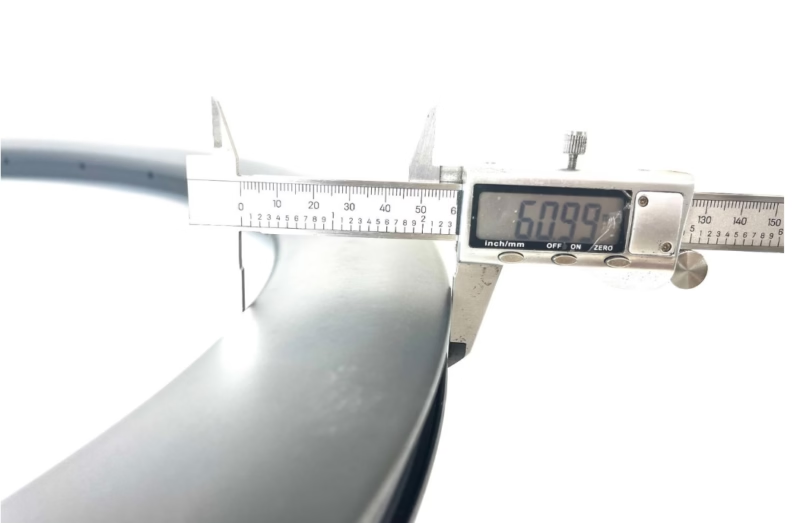
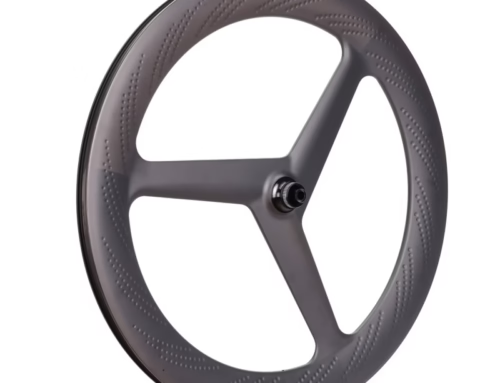
Rim depth refers to the side profile of the wheel. Imagine a hollow bucket; the rim depth is the distance from the bottom of the bucket (inner rim) to the top edge (outer rim), not the diameter of the entire wheel.
This height primarily affects three factors: aerodynamics, weight, and handling. These three are always a trade-off. There is no absolute “best” depth; it depends on your regular routes. The depth determines whether your ride feels effortless or agile.
Core takeaway: Deep rims for speed, shallow rims for agility, and mid-depth rims for versatility.
Shallow Rims (Under 30mm): The Agile Climber and Commuter
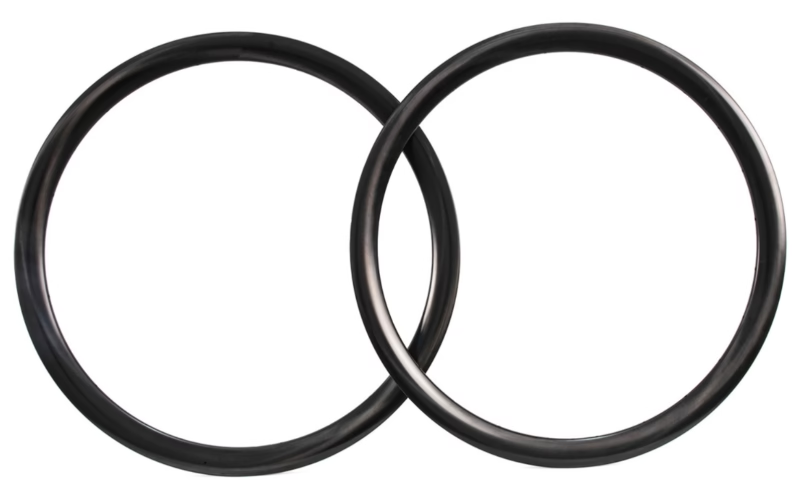
If you frequently do the following, shallow rims are perfect for you:
-
Climbing: Tackling steep, winding mountain roads on weekends. While others on deep rims feel the burn, shallow rims feel light and responsive underfoot.
-
Commuting: Riding daily on roads with speed bumps and potholes. Shallow rims absorb vibrations better, preventing numb hands.
-
Beginner Safety: Buying your first carbon wheelset and fearing crosswind instability. Shallow rims track straight even in heavy side winds.
-
Ride Feel: Lightweight, agile, comfortable on bumps, highly resistant to crosswinds, and highly recommended for beginners.
Mid-Depth Rims (30mm – 50mm): The Versatile All-Rounder
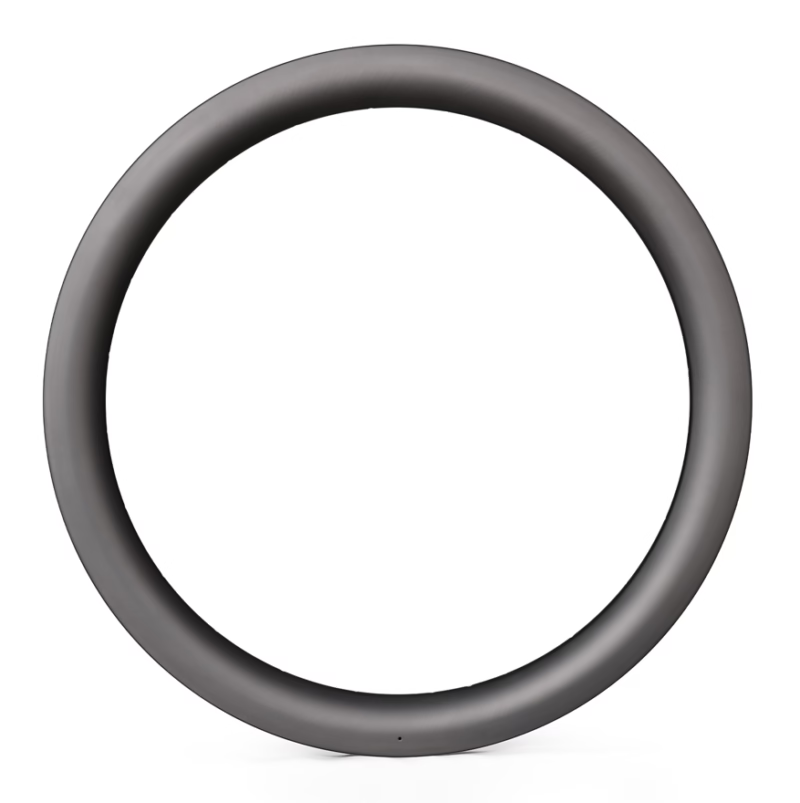
This is the safest choice for most beginners and fits almost every rider:
-
Mixed Terrain: Perfect for routes mixing flat city roads and rolling hills. They aren’t too heavy for climbing and offer enough aerodynamic advantage for flat speeds.
-
Group Rides: Great for weekend fast-paced rides where you want a sense of speed without wrestling the bike in crosswinds.
-
Ride Feel: Balanced, versatile, and offers the best overall value. You cannot go wrong with mid-depth rims.
Deep Rims (50mm and Above): The Flat-Road Speedster
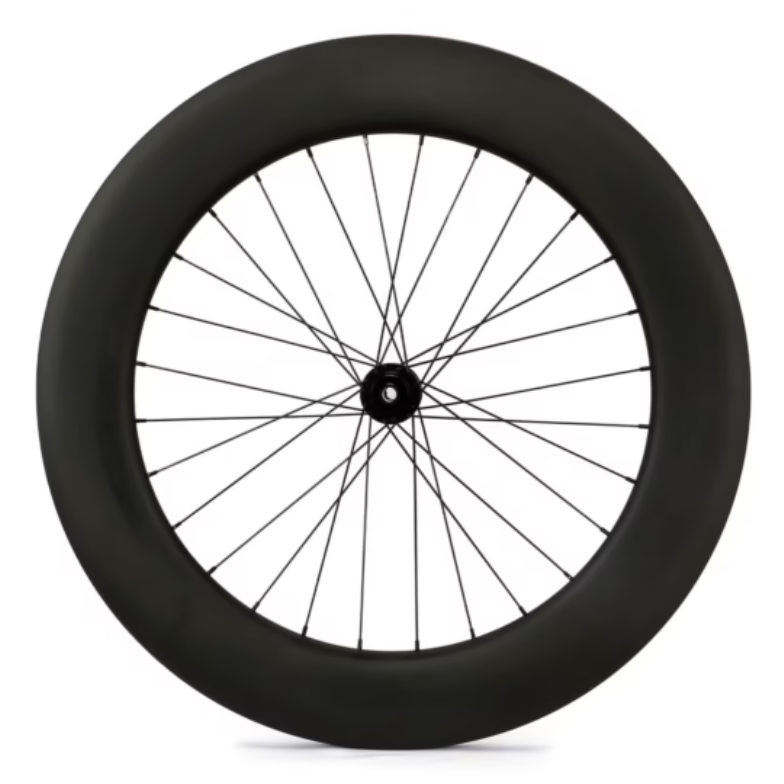
Avoid blindly following trends; deep rims are strictly for flat, calm conditions:
-
Flat Sprints: Riding along rivers or lakes with no hills and minimal wind. Deep rims act like an aerodynamic race car, saving you significant watts. Keep a steady cadence, and you will cover more distance per hour than on shallow rims.
-
Racing: Ideal for amateur crits or sprint finishes.
-
The Catch: If there is a strong crosswind, the front wheel can be blown off course easily. Handling becomes very difficult for beginners.
-
Ride Feel: Fast and stable in calm weather, but highly susceptible to crosswinds. Beginners should proceed with caution.
How Does Spoke Count Affect Your Ride?
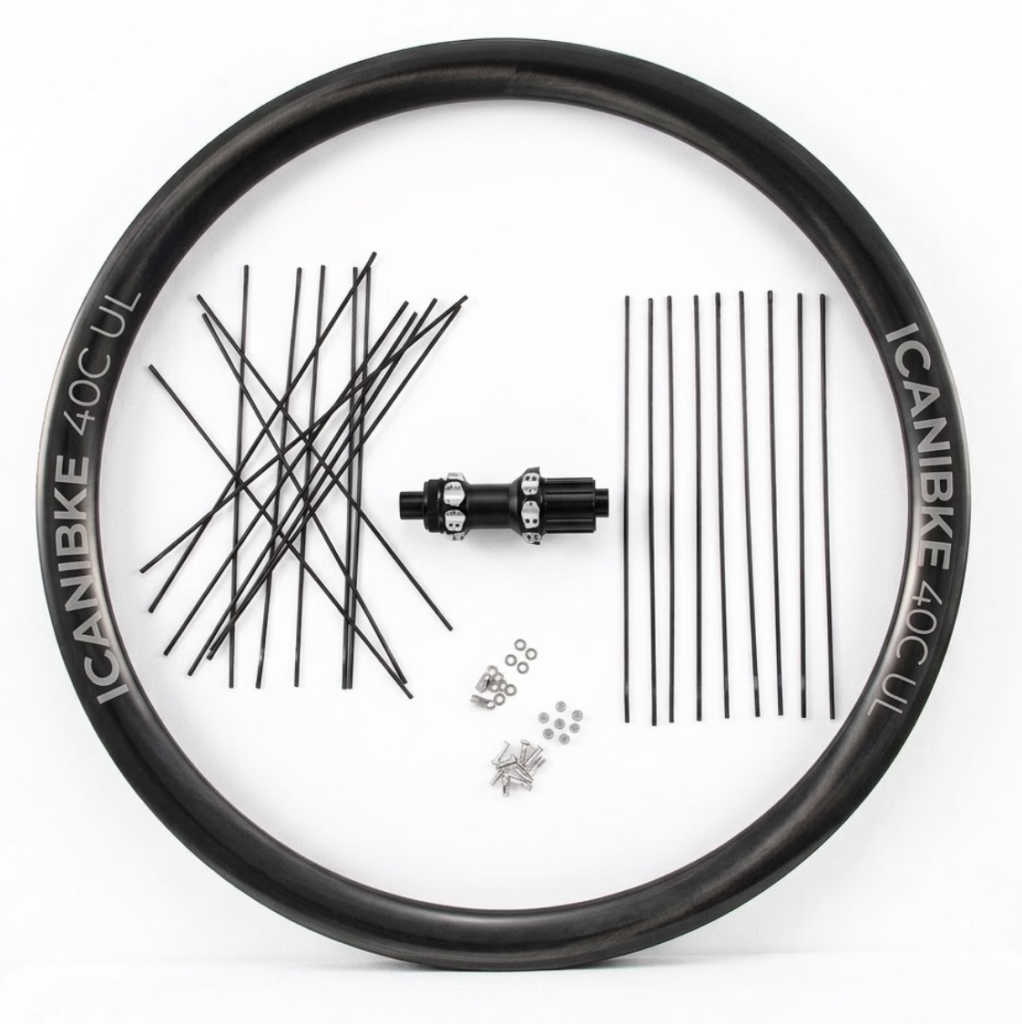
Spokes are the thin metal rods connecting the rim to the hub. The number of spokes determines how durable and comfortable the wheel is.
Core takeaway: More spokes mean better durability; fewer spokes mean a lighter, faster feel. Mid-spoke counts work for the majority.
Low Spoke Count (16-24 Spokes, commonly 20/24): The Lightweight Choice
Recommended only for two specific groups:
-
Lighter Riders: Those weighing under 65 kg (143 lbs) riding strictly on flat roads or racing. Fewer spokes mean lighter wheels and faster acceleration.
-
Weight Weenies: Advanced cyclists prioritizing a lightweight setup over absorbing minor road vibrations.
-
Warning: Riders over 75 kg (165 lbs) should avoid this setup. The wheels will flex, and long-term use can lead to broken spokes.
Medium Spoke Count (24-28 Spokes, commonly 24/28): The Universal Standard
Whether you weigh 65 kg or 80 kg, and whether you commute or hit rough suburban roads, this is a solid foundation:
-
Durability: Handles daily potholes and road impacts with ease.
-
Balance: Offers moderate weight for decent acceleration while providing enough compliance so the ride doesn’t feel harsh.
-
Ride Feel: A perfect fit for anyone. Beginners can buy this configuration with zero hesitation.
High Spoke Count (28+ Spokes, commonly 32): The Heavy-Duty Workhorse
Choose this setup immediately if you meet any of these three conditions:
-
Heavier Riders: Weighing over 90 kg (198 lbs) and needing wheels that can support the extra load.
-
Rough Terrain: Riding gravel, dirt, or heavily potholed roads. High spoke counts provide rock-solid stability.
-
Bikepacking: Carrying heavy luggage or panniers. The extra spokes prevent the wheels from warping under the additional cargo weight.
The Ultimate 3-Step Beginner Guide
Skip the complicated technical jargon and follow these three simple steps to avoid buying the wrong wheels:
-
Look at Your Route: Climbing/Commuting → Shallow Rim. Mixed Terrain → Mid-Depth Rim. Flat Racing → Deep Rim.
-
Look at Your Weight: Under 65kg → Low Spoke Count. 65kg to 90kg → Medium Spoke Count. Over 90kg → High Spoke Count.
-
Avoid Pitfalls: Beginners should not chase overly deep rims (due to crosswinds) or excessively low spoke counts (due to fragility). A mid-depth rim with a medium spoke count offers the highest margin of error.
Choosing a wheelset isn’t about comparing which specs look more “pro” on paper. It’s about finding the wheelset that understands your riding style. The roads you ride the most are your best standard for choosing.
Note: You might also hear about rim width (inner and outer). Width affects tire compatibility and advanced aerodynamics, but it does not impact a beginner’s ride quality as drastically as rim depth. Similarly, spoke material and shape also play a role, but spoke count remains the primary structural factor.
FAQ
1. Does a deeper carbon rim automatically make me faster?
Only on flat roads at higher speeds (usually over 30 km/h). The aerodynamic benefits help maintain speed, but the extra weight will actually slow you down on steep climbs.
2. What is the safest carbon wheel depth for a complete beginner?
A mid-depth rim between 35mm and 45mm is the safest choice. It provides a noticeable aerodynamic upgrade over standard alloy wheels without becoming dangerous to handle in windy conditions.
3. Can a heavy rider (over 90kg/200lbs) use a 20-spoke wheelset?
It is highly discouraged. A low spoke count on a heavier rider will cause the wheel to flex under power, reducing efficiency and significantly increasing the risk of snapping spokes or cracking the rim.
4. Why do deep wheels feel dangerous in crosswinds?
Deep rims act like sails. When a sudden gust of wind hits the side of the front wheel, it violently pushes the steering column. This can cause you to swerve into traffic if you are not experienced in handling it.
5. Are shallow rims only good for climbing?
While they excel at climbing due to their low rotational weight, they are also excellent for city commuting. They accelerate quickly from stoplights and handle rough pavement more comfortably than stiff, deep wheels.
6. Does the inner rim width matter when choosing wheels?
Yes, but it is secondary to depth for beginners. Wider inner rims (e.g., 21mm+) pair better with wider modern tires (28c or 30c), allowing lower tire pressures for increased comfort and grip.
7. Can I use road bike wheels on a gravel bike if the spoke count is high?
While a high spoke count helps with durability, gravel riding also requires rims wide enough to support 35c-45c gravel tires and a carbon layup designed for heavy impacts. It is better to buy a dedicated gravel wheelset.