25mm-180mm, or even fully closed, how do professional cyclists choose rim depth?
There are many types of cycling races, and the road conditions vary greatly. Flat stages of grand tours, steep climbs in the Alps, ultra-aero time trials, or off-road cyclocross—all require different rim depths for different riders. Every millimeter in rim choice is carefully considered; there is no absolute “best standard,” but we can outline an optimal range.
In this article, we categorize rim depth selection by race type and event.
I. Road Cycling Races
Road Race Peloton
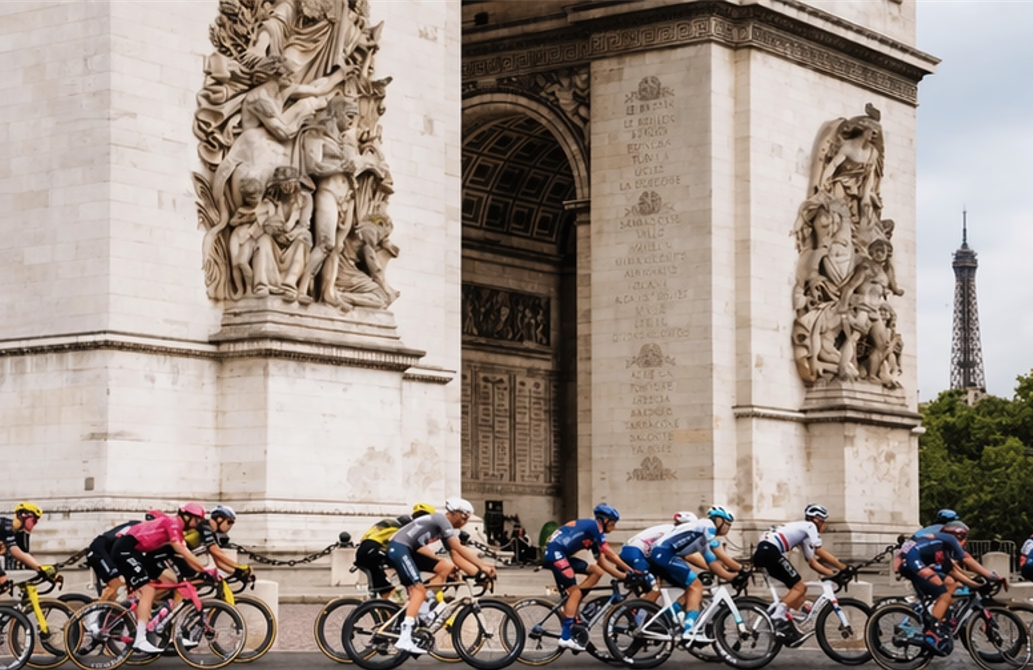
Grand tours (e.g., Tour de France, Giro d’Italia) are core events with mass starts, covering flat roads, steep climbs, and hilly terrain.
Rim depth limit: UCI announces a maximum rim depth of 65mm starting January 1, 2026.
Riders choose different rim depths depending on terrain:
- Flat sprint stages: Aerodynamics is key; rims are usually 50-55mm front, 65mm rear. In the past, higher rims were used (e.g., Pogacar used a 67mm rear in the Tour de France), but this will be illegal next year. In windy conditions, rim depth is reduced.
- Climbing stages: Weight reduction is critical; rims are generally 35-40mm front, 45-50mm rear.
- Mixed terrain: Balance between aerodynamics and weight; most riders select 45-55mm rims.
Individual / Team Time Trials (ITT/TTT)
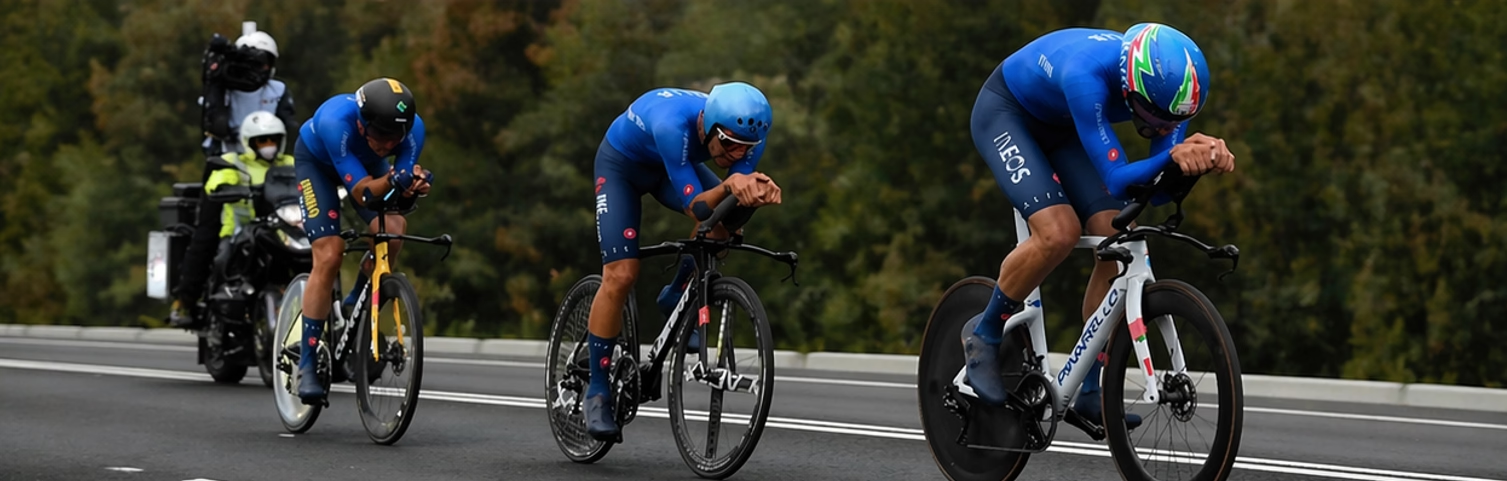
Entirely flat courses, no climbing.
- Individual time trials: Front rims typically 70-80mm, rear 90-110mm or fully disc.
- Team time trials: Rely on drafting and coordination; riders generally choose 55-60mm front + 70-80mm rear to avoid compromising formation handling.
Track Cycling
Indoor wooden tracks, short sprints, pursuits, Madison (Olympic event).
- Extreme acceleration is prioritized; riders usually select 30-40mm rims front and rear.
II. Off-Road / Mixed Terrain Events
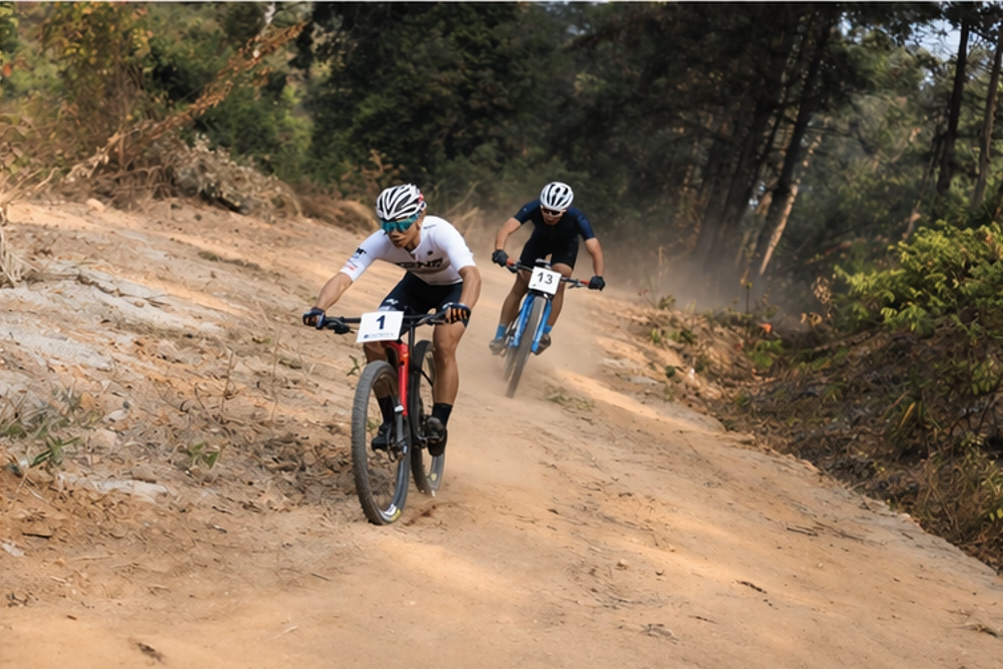
Mixed terrain with mud, obstacles, and short climbs.
Rim depth limit: UCI announces a maximum rim depth of 65mm starting January 1, 2026.
Front and rear rims are typically 35-40mm to maximize clearance.
Gravel Racing
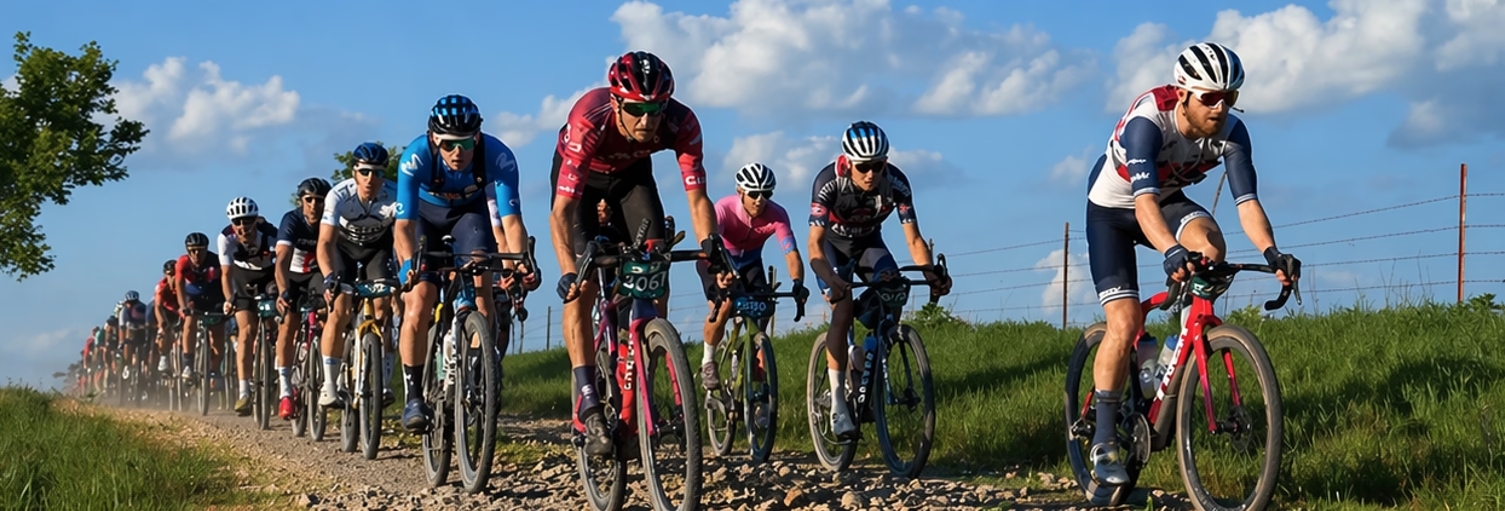
Combination of gravel and road, long endurance events.
- Riders generally choose 40-45mm front, 50-55mm rear.
- Long mixed-surface courses require a balance of clearance and aerodynamics.
III. Mountain Bike Racing
Cross-Country (XC)
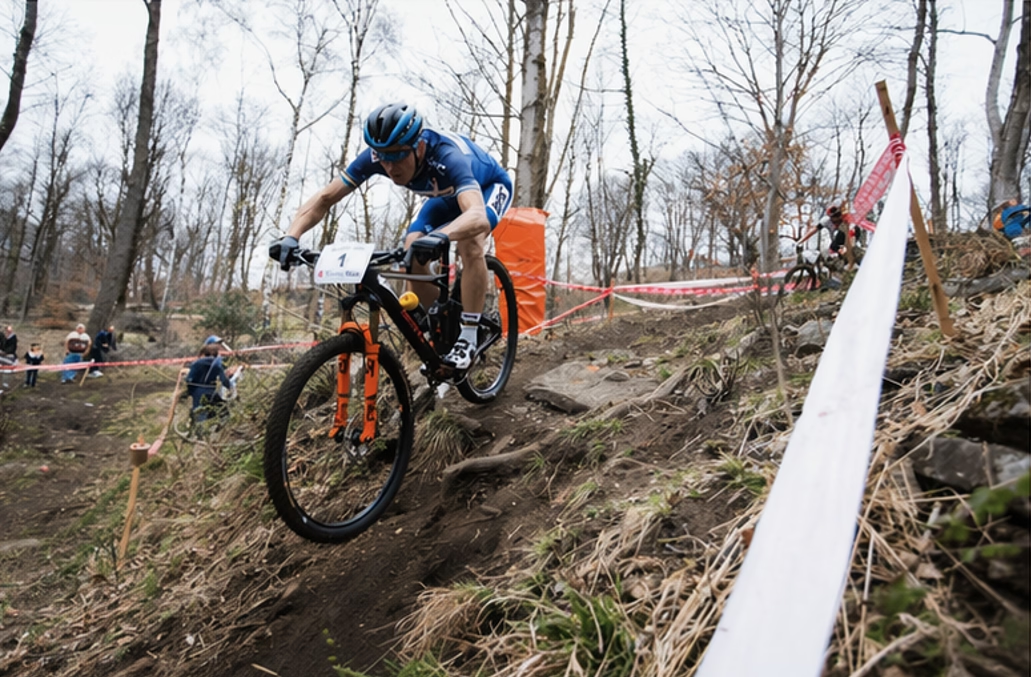
Mixed forest climbs and descents, emphasizing lightweight and handling.
- Frequent climbing requires 25-35mm rims; lightweight is prioritized while maintaining impact resistance.
Downhill (DH)
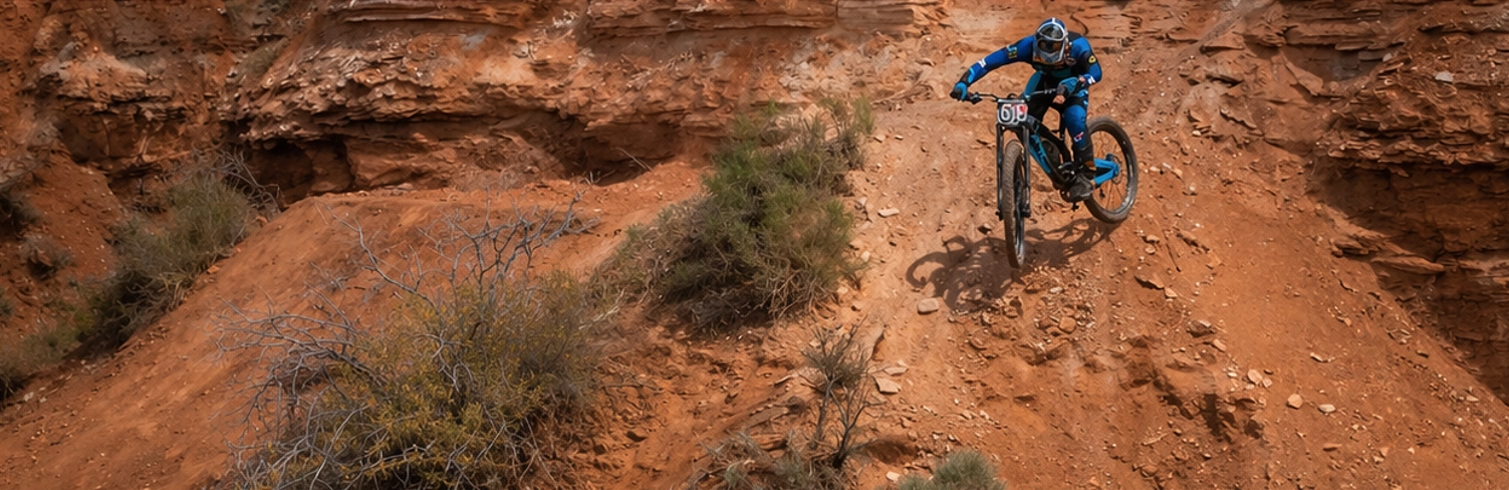
Steep high-speed descents with high impact; in my view, these conditions are barely “roads” at all.
- Riders usually choose 25-35mm ultra-low rims front and rear to enhance bump absorption.
- Even rim setup is critical; mismatched rims should be avoided due to uneven stress distribution.
All-Mountain / Enduro (AM)
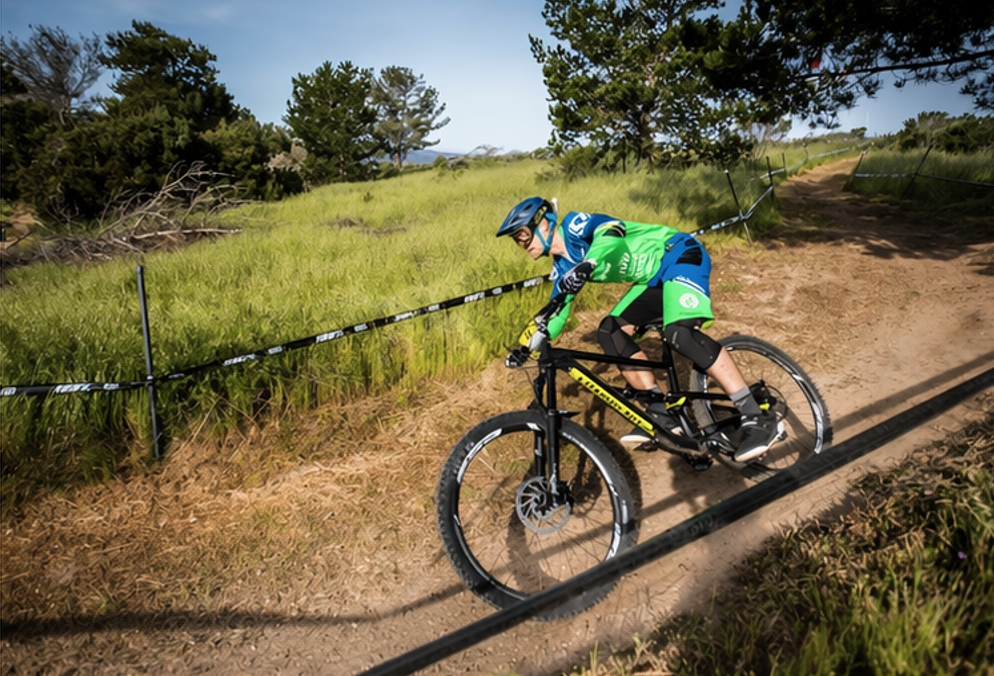
Mixed stages including climbs and high-intensity descents.
- Requires both downhill stability and climbing efficiency; generally 30-40mm rims front and rear.
IV. Other Events
Some less common events:
- Triathlon (bike leg): Entirely flat; front 70-80mm + rear disc (or 180mm super-deep) rim.
- BMX Racing (small bikes): Short muddy tracks; 40-55mm rim depth.
- BMX Freestyle (small bikes): Trick performance; 30-40mm rim depth.
For long flat stages, “mismatched” (aero front + deeper rear) setups are common, but only suitable for aero-demanding flat courses. The front and rear rim difference should not be too large.
This summarizes mainstream rim depth choices in current professional cycling.
Conclusion: The ICANBIEKS Perspective on Performance Engineering
Choosing the right rim depth is a sophisticated calculation of aerodynamics, weight, and stability. At ICANBIEKS, we understand that for professional teams and global bike brands, the “perfect” setup requires more than just choosing a number—it requires precision manufacturing and engineering integrity.
As a leading specialist in high-performance Carbon Bike Rims and complete Carbon bike wheelsets, we provide the technical foundation for athletes to excel across all terrains. Our expertise extends beyond standard specifications; we focus on the synergy between rim profile and structural durability.
As a leading specialist in high-performance Carbon Bike Rims and complete Carbon bike wheelsets, we provide the technical foundation for athletes to excel across all terrains. Our expertise extends beyond standard specifications; we focus on the synergy between rim profile and structural durability.
Why Partner with ICANBIEKS for Your Wheel Program?
R&D and Quality Control: We manage the entire lifecycle of production, from initial carbon fiber layup design to final assembly. Every Carbon bike wheelset undergoes rigorous internal testing to ensure it withstands the extreme stresses of professional racing.
International Standards: Our products are engineered to meet and exceed UCI, EN standards, ensuring your brand offers race-legal, world-class equipment to end-users.
OEM/ODM Customization: We cater specifically to wholesalers and brand owners looking for a competitive edge. Our OEM/ODM personalized customization services allow you to define unique rim profiles, carbon weaves, and bespoke technical specs tailored to your market’s niche—whether it’s ultra-light climbing rims or UCI-compliant aero sets.
Strict Testing Protocols: From high-temperature braking tests for rim-brake models to impact resistance verification for MTB and Gravel, our quality assurance guarantees a lower return rate and higher brand prestige for our partners.