Want Lightweight Without Losing Performance? Tubeless-Ready Rims Are the Answer!
Bicycle rim technology has evolved rapidly in recent years. The tubeless-ready (hookless) design has sparked some debate: some say it’s a gimmick, while others claim it combines aerodynamics and weight savings. For riders, the focus is mainly on safety, performance, and applicable scenarios.
1. Definition of Hookless Rims
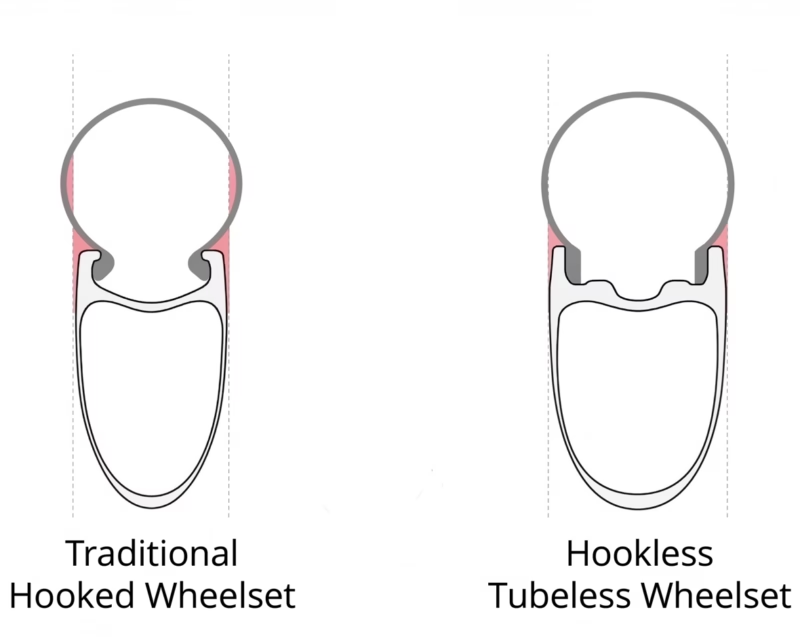
Let’s start with a diagram to help beginners quickly understand the differences among the three common rim types.
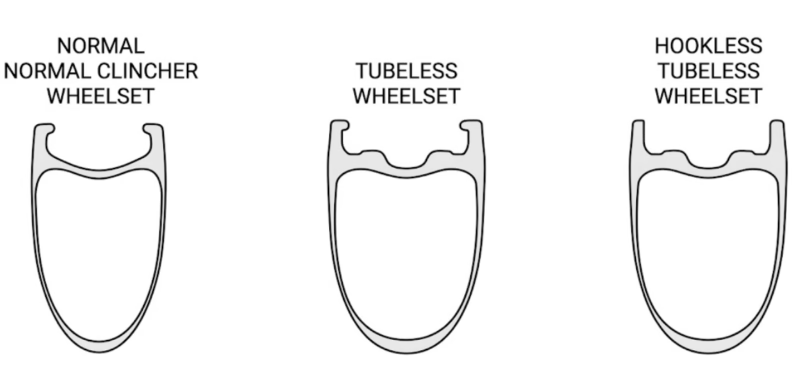
What is a hookless rim? As shown in the diagram, the distinction is clear: “hookless” means the rim sidewalls lack the hook that traditionally secures the tire.
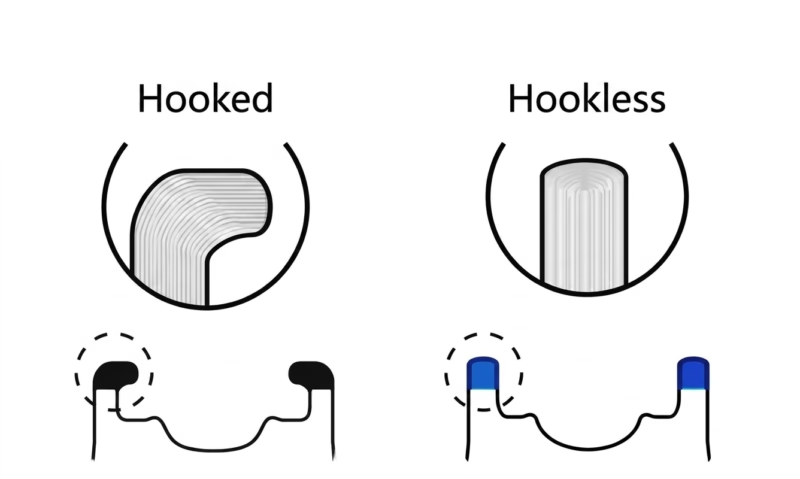
2. Principle and Safety
Some riders might ask: without hooks, how is the tire secured? The answer is in the diagram.
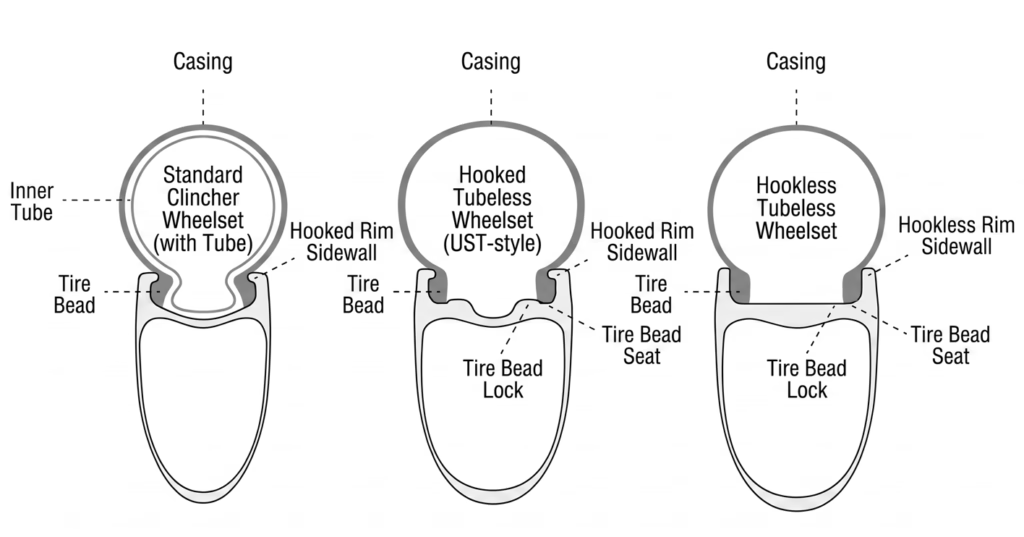
Hookless rims are not entirely new—they were first widely used in automotive wheels and later became standard in high-end mountain bikes. In tubeless setups, the tire is secured mainly by the bead lock and bead seat, making tire compatibility critical. With proper matching, safety is comparable to hooked rims. However, with incompatible tires at high pressures, tire blow-off is possible.
Hookless rims have thicker edges, offering stronger resistance to damage in low-pressure scenarios such as gravel or mountain biking. In terms of safety, both hooked and hookless designs have their pros and cons, allowing riders to choose based on their priority.
3. Advantages of Hookless Rims
- Lightweight and Cost
Hookless rims simplify manufacturing, reducing weight by 10%-15% and lowering cost. However, some high-end hooked rims can achieve similar weight savings through advanced structural design, so the advantage is less pronounced at the top-tier level. - Comfort and Grip
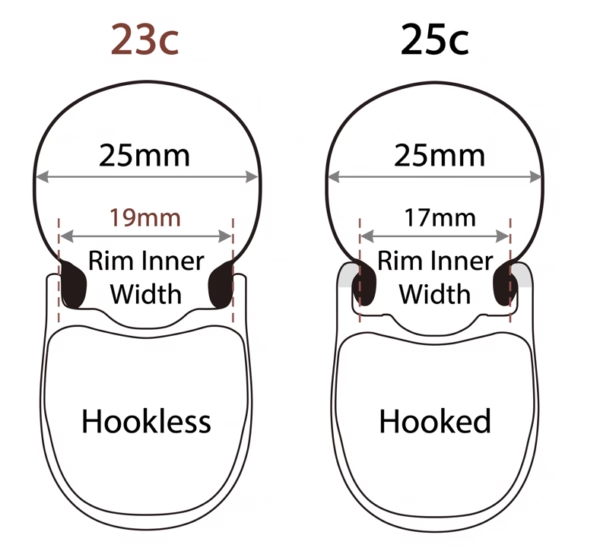
A hookless tubeless rim allows smaller tires to fully “inflate,” achieving the grip and comfort of larger tires with less weight. This is also a key reason for the overall weight reduction.
- Cornering Performance
Hookless rims allow the tire to maintain its shape better during turns, providing stronger sidewall support and significantly improving cornering performance.
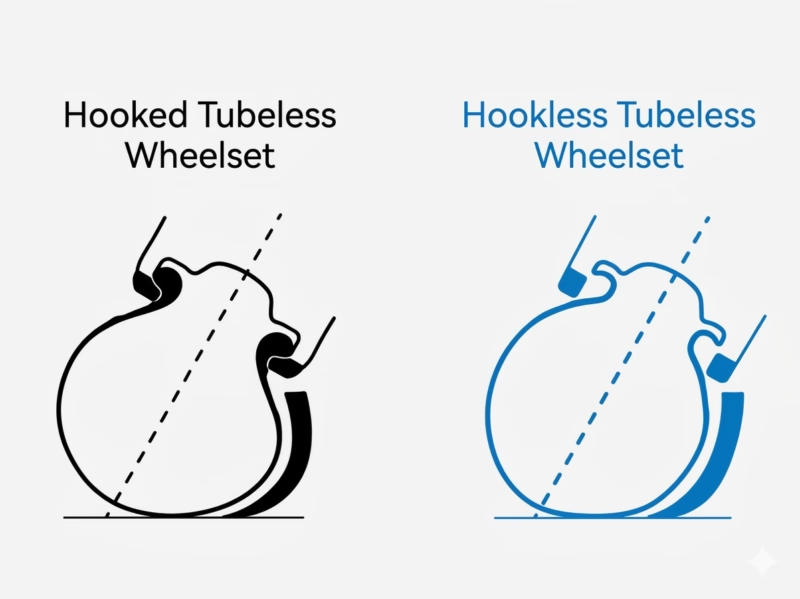
- Aerodynamics
Without hooks, the tire profile is rounder, which can improve aerodynamics. However, this effect is relatively minor; rim shape still dominates aerodynamic performance, so this benefit is more of an added bonus.
4. Suitable Scenarios and Considerations
Hookless rims are particularly well-suited for mountain and gravel bikes. Road bikes can also benefit, but attention to tire pressure and compatibility is necessary. For competitive road riding—high-pressure climbing, long-distance endurance races, or situations requiring broader tire compatibility—some riders may still prefer hooked rims. Regardless of type, rim-tire compatibility is critical.
In my view, hookless rims are the future. At least for mountain and gravel bikes, adoption is already widespread.
At ICANBIKES, we fully embrace this trend. We specialize in producing high-quality carbon fiber rims and complete wheelsets for competitive road, gravel, and mountain biking, all UCI-certified for professional use. We provide both OEM/ODM carbon bike customization services, helping Brand/Wholesaler partners deliver performance, durability, and innovation to their customers. Our expertise ensures each rim and wheelset meets the highest standards, giving our clients a competitive edge in both performance and market differentiation.