The Ultimate Gravel Bike Geometry Guide
Unveiling the Mystery Behind the Numbers in Gravel Bike Design – How to Choose the Perfect Model and Size for Your Riding Style
Gravel bikes (also known as all-terrain road bikes) were designed from the ground up to conquer diverse surfaces and obstacles. But what creates the differences between aggressive aero race-oriented gravel bikes at one end and big-tire long-distance adventure machines at the other? In this guide, we’ll dive deep into gravel bike geometry details, revealing why these versatile machines have their unique personalities. We’ll also share simple tips to help you select the right size and geometry orientation for your riding style.
Why Gravel Bike Geometry Matters
Agile or sluggish, stable or nimble, load-carrying or minimalist – every gravel bike’s design style profoundly impacts its riding characteristics. With the explosive popularity of gravel bikes in recent years, we’ve seen a surge in specialized categories: race-focused models for gravel events or heavy-duty frames built for bikepacking.
Cyclocross (CX) vs. Gravel Bike Geometry: How Do They Differ?
Cyclocross bikes are purely race-oriented, while gravel bikes offer broader versatility.
Though they look similar, their geometries differ significantly. CX bikes are built for high-intensity races under 1 hour, featuring steeper head tube angles, shorter wheelbases, higher bottom bracket (BB) heights, and narrower tire clearance (up to ~33mm). This combo delivers razor-sharp, precise handling with quick steering for tight technical corners. Larger front triangles and level top tubes make shouldering the bike easier – dismounts and run-ups are CX staples.
In contrast, gravel bikes prioritize longer wheelbases, lower BB heights, and slacker head tube angles for superior stability on rougher off-road terrain. Most designs adopt a more upright riding position, ideal for long-distance adventures or multi-day bikepacking expeditions.
(Sources confirm: CX has higher BB ~70-75mm drop vs. gravel’s lower ~72-80mm for stability; slacker HTA <72° on gravel vs. steeper 72-73° on CX.)
Choosing the “Right” Geometry for You
Selecting geometry that matches your riding style is more important than nailing the size. Gravel bikes fill the gap between endurance road bikes and mountain bikes: from low/short race setups to long/high adventure-oriented ones for challenging off-road traverses.
Consider your primary terrain: Paved roads with light gravel? High-speed gravel racing? Or rocky, root-strewn singletrack pushing gravel limits? Your answers dictate the geometry.

How to Pick Your Perfect Size
Riding the right-sized bike unlocks full benefits: comfort, power output, and efficiency.
Gold standard: Professional bike fitting – on a fit bike or trainer. Do it before buying; use the data to shop confidently. Bike shops can match sizes to your fit numbers, measure setups, and offer test rides.
If you have a well-fitting bike, compare its geometry data to candidates. Remember: Brand M might equal another brand’s L – focus on raw numbers like Stack/Reach.
Key Gravel Bike Geometry Parameters (And Why They Matter)
When hunting your ideal gravel bike, compare these specs across models:
Tire Clearance
The foundational spec for tire width needs. Gravel frames/forks are wider than road bikes for bigger rubber – a defining trait.
Typical clearance: 40mm to 2.1″ (53mm)+, plus ISO-4210’s 6mm side gaps. You could squeeze wider tires, but it hurts mud clearance and risks frame damage – stick to specs!
Wider tires boost traction/throughput; tech-trail or heavy-load bikes get max clearance, while race models are tighter (~40mm).
Example: ICAN G9 (2025) clears 700x50c – mid-upper range for versatile racing/adventure.

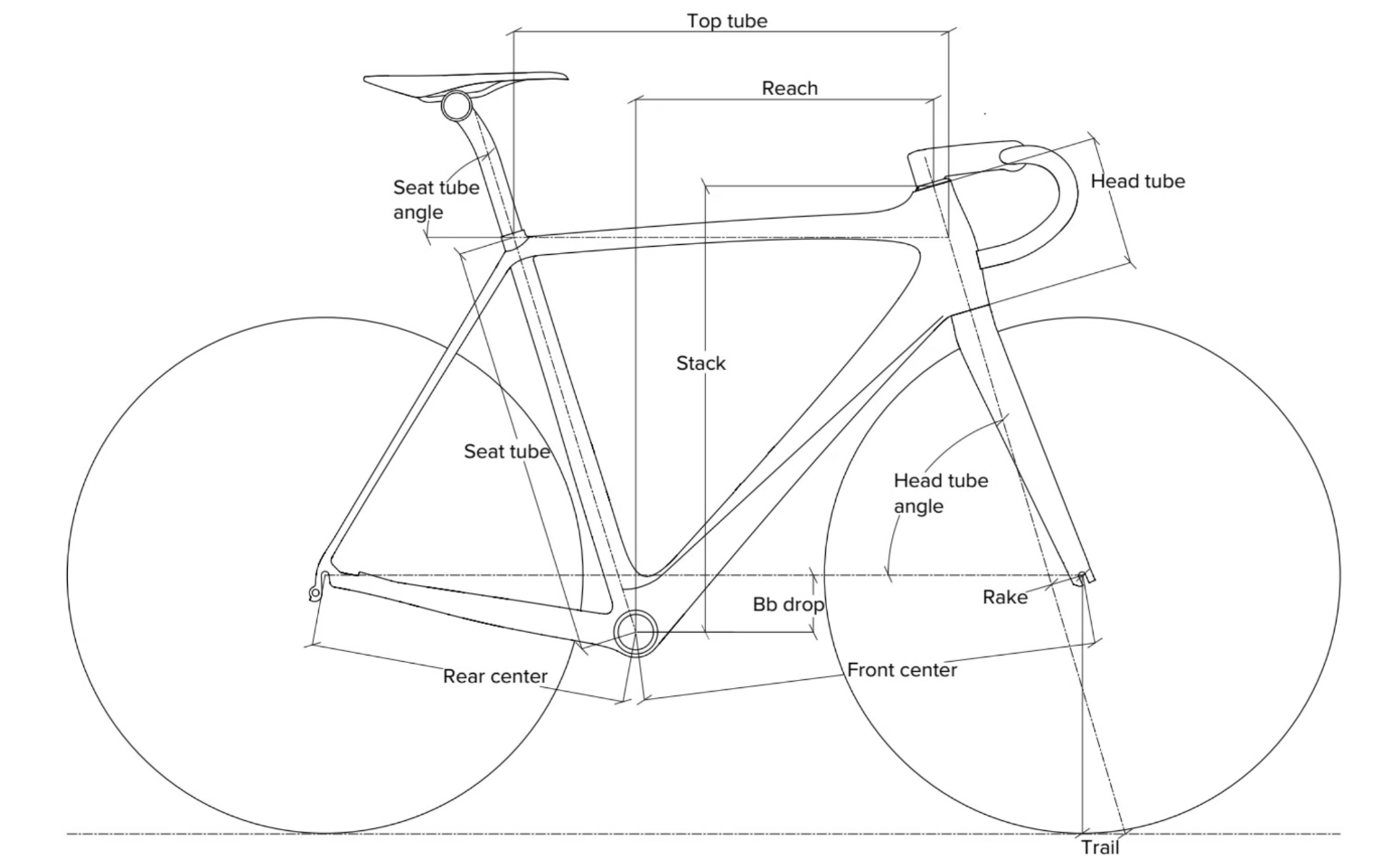
Head Tube Angle
Slack(er) = more off-road. Familiar to MTB riders, this dictates front wheel trail/stability.
Slack angles (<70° on MTB-leaning gravel) push the wheel forward for bombproof steep/rough descents. Race gravel: 70-72° (road/CX-like) for snappy steering.
(Endurance road overlaps race gravel; pure road is steeper.)
ヘッドチューブ長
Longer tubes = upright posture (add spacers for fine-tuning). Stack is better for aggression comparisons.
BB Height
Ground-to-BB-center distance (varies with wheels/tires). Lower = stable on rough roads, steep drops, hard braking – but higher pedal strike risk on rocks/roots.
Typical gravel: 260-280mm loaded height.
BB Drop
BB center to axle centerline vertical distance – wheel-independent, pure frame metric.
More drop = lower/stabler, but pedal strike trade-off. (ICAN G9: Progressive sizing maintains balance.)
Wheelbase & Chainstay Length
Front-rear axle distance. Shorter = nimble (race), longer = stable (tech terrain). Longer chainstays (often for tire clearance) enhance planted feel.
Top Tube Height
Mid-top tube to ground. Sloping tops (popular in gravel) boost seatpost poke for compliance/comfort, but shrink front triangle bag space. Level tops aid standing clearance but limit bikepacking.
Top Tube Length
Key sizing metric (headset to seat tube), but use effective TT (horizontal) to ignore slope.
Too short = cramped; too long = stretched. Gravel’s upright bias means shorter TTs/higher heads vs. aero road. Reach > TT length for comparisons.
Reach & Stack
Best for cross-bike comparisons: BB center to head tube top (horizontal/vertical).
Some include headset height – check notes. Match your fave bike’s numbers; adjustable via spacers/stem/hoods.
ICAN G9 Example (mm, progressive geometry):
| サイズ | スタック | リーチ |
|---|---|---|
| XS | 532 | 380 |
| S | 552 | 385 |
| M | 570 | 390 |
| L | 591 | 395 |
| XL | 612 | 400 |
Aggressive profile: Lower stack/longer reach for efficient, stretched posture – UCI-approved race vibe with gravel versatility (1050g frame!).
Other Considerations
Tailor to needs:
Winter/fenders? Ample clearance post-fender for mud.
Loaded rides? Level top = big front triangle; sloping = seatpost bag.
Upright posture? More bar-tire space for handlebar bags (watch small riders).
Small riders: Longer gravel wheelbases/slack heads minimize toe overlap vs. road – but test low-speed turns.