Why Spoke Tension Is Critical in a Wheelset?
Spoke tension is one of the most important yet often overlooked factors in wheel performance. It directly affects durability, stability, acceleration, braking efficiency, and riding safety.
For any professional handbuilt carbon road bike wheelset manufacturer, controlling spoke tension is not optional—it is the foundation of performance.
What Is Spoke Tension?
Spoke tension refers to the pulling force applied to each spoke in a wheel. Proper tension ensures the rim maintains its shape under load, distributes forces evenly, and prevents structural failure.
Why Spoke Tension Uniformity Matters
A high-quality wheelset is not defined by maximum tension—but by consistent tension across all spokes.
In a well-built 28-spoke wheel:
- Drive-side and non-drive-side spokes have different baseline tensions
- The variation between individual spokes should be minimal
- Typical deviation is within ±20 kgf (≈200N)
Uniformity ensures:
- Better load distribution
- Improved durability
- Reduced risk of spoke fatigue
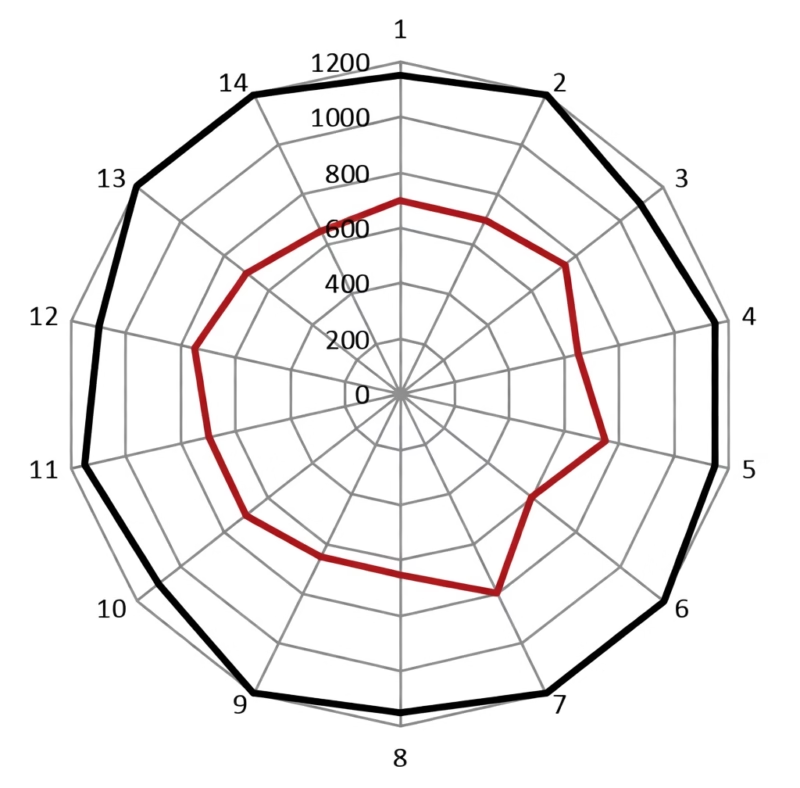
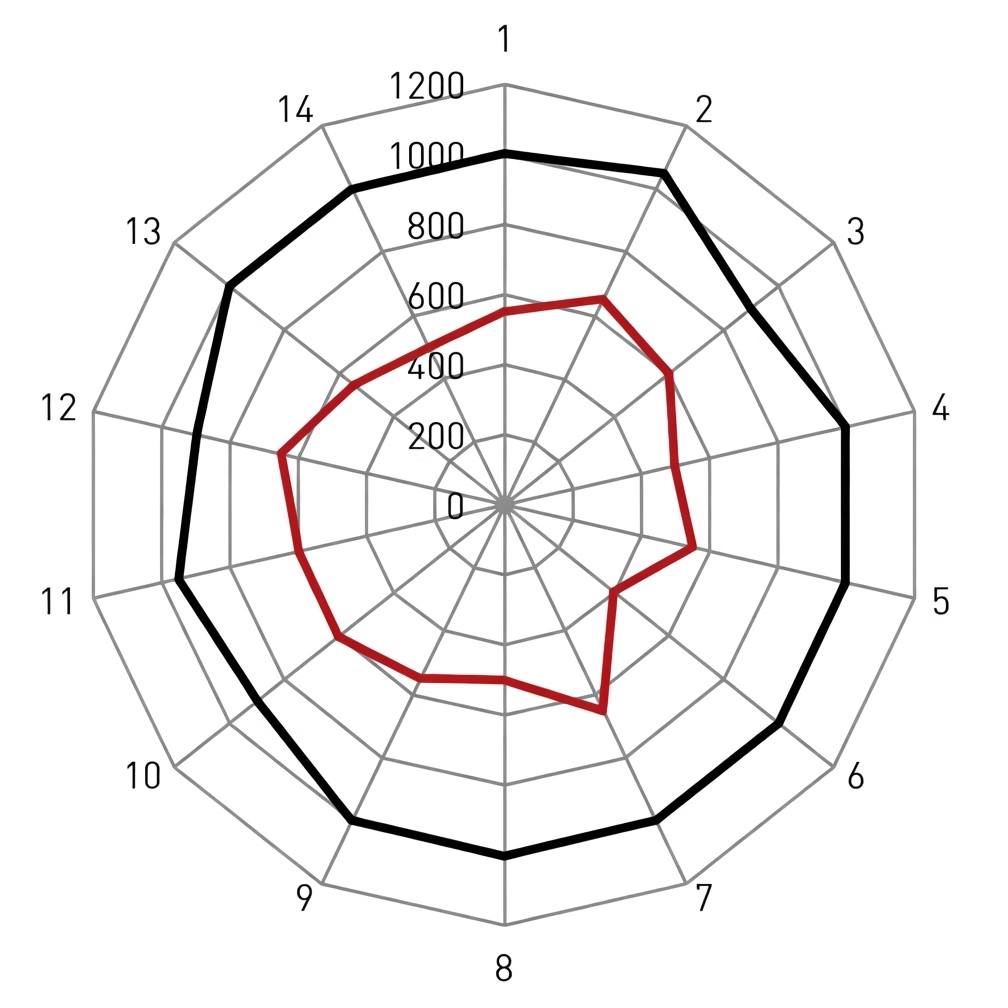
The image above is a spoke tension diagram of a wheel with 28 spokes and no tire installed. Black represents the spoke tension on the drive side, and red represents the spoke tension on the non-drive side. On the background spiderweb grid, the tension difference between each ring is 200N, which converts to approximately 20 kgf (kilogram-force). Here, we can see that the differences between the spoke tensions are very small.
How Tire Pressure Affects Spoke Tension
When a tire is mounted and inflated:
- Internal pressure reduces overall spoke tension
- However, a properly built wheel maintains consistent tension distribution
This balance is critical for maintaining structural integrity during real-world riding.
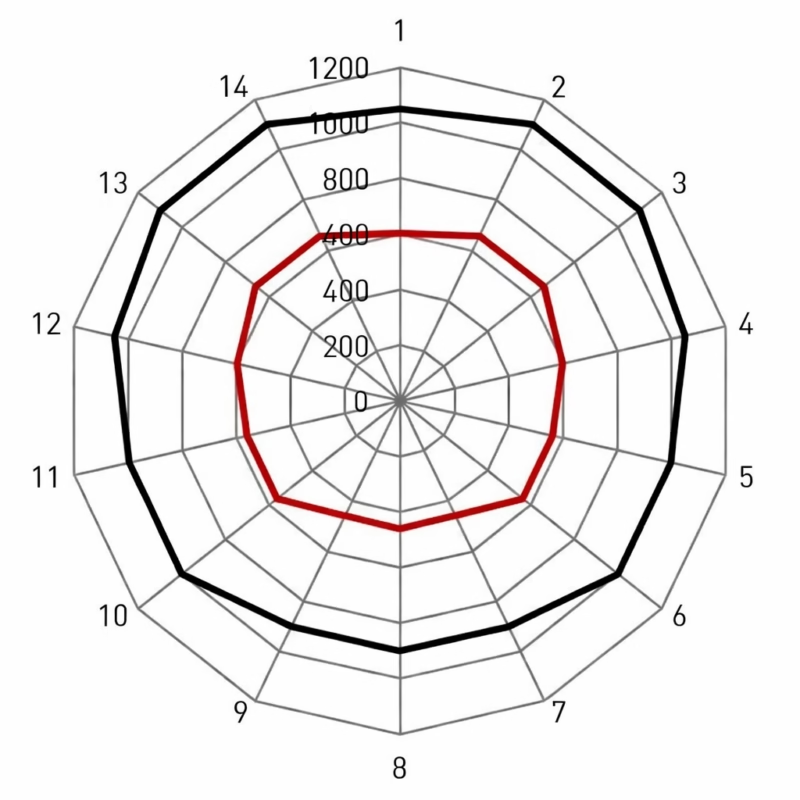
This diagram shows that after a tire is mounted on the wheelset, the spoke tension is affected due to tire pressure. Overall spoke tension decreases, but the difference between individual spokes is not significant.
Load Distribution Under Rider Weight
When a rider sits on the bike:
- Upper spokes increase tension
- Lower spokes lose tension
This happens because spokes only work in tension, not compression.
The wheel does not “stand” on the bottom spokes—
It is “suspended” by the tension of the upper spokes.
This picture still shows the same wheelset. However, tires have now been installed, and a rider has been added under static conditions. It’s clear that the spoke tension in the upper half of the wheelset has increased, while the spoke tension in the lower half has decreased. This is because spokes in a wheelset only function in tension and cannot provide support. When weight is applied to the wheelset, the spoke tension in the upper half increases.
Dynamic Stress During Riding
Spoke tension is constantly changing during riding.
- Each spoke may experience 400–500 tension cycles per kilometer
- This repeated stress makes proper tension setup essential
What Happens If Spoke Tension Is Too Low?
- Spokes loosen over time
- Load shifts unevenly
- Wheel becomes unstable (wobble / hop)
- Reduced lifespan
What Happens If Spoke Tension Is Too High?
- Spokes may exceed elastic limits
- Permanent deformation occurs
- Tension loss and imbalance
- Increased risk of failure under impact
Optimal Spoke Tension – The Balance Point
The ideal spoke tension is:
- High enough to maintain stiffness
- Low enough to avoid material fatigue
- Evenly distributed across all spokes
Factory wheels often use a generalized setup.
However, a custom carbon wheelset with hub and spokes allows precise tuning based on rider needs.
Why Handbuilt Wheelsets Deliver Superior Performance
Compared to mass production, handbuilt wheels offer:
- Precise tension control
- Custom tuning based on rider profile
- Higher consistency
This is why premium brands rely on:
- OEM carbon wheelset production
- Custom bicycle wheels manufacturer solutions
- Private label bike wheels
- Custom hub spoke wheelset configurations
- Logo branded carbon wheels
ICANBikes Quality Control System (Trust Section)
As a professional:
- handbuilt carbon road bike wheelset manufacturer
- OEM aero carbon wheels supplier
- provider of lightweight handbuilt bike wheels wholesale
we ensure every wheelset meets the highest standards.
Our Process:
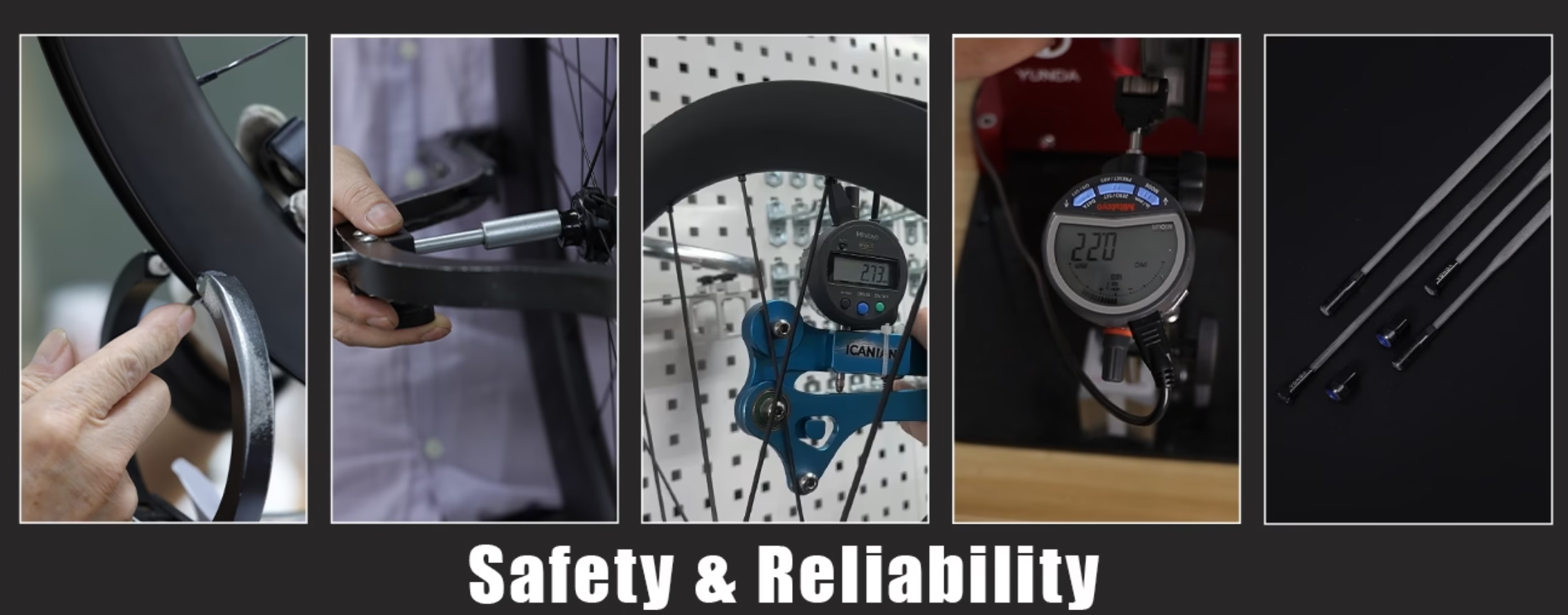
- 100% handbuilt wheel construction
- 100% inspection before delivery
- Unique QR code tracking system
Each wheelset includes:
- Spoke tension distribution map
- Trueness data (±0.1 mm tolerance)
- Signed quality inspection report
Every wheel is fully documented to guarantee traceability and reliability.
Conclusion
Spoke tension is the core engineering factor behind wheel performance.
Only through precise control, uniform distribution, and expert handbuilding can a wheelset deliver maximum durability and riding efficiency.
FAQ
1.What is the ideal spoke tension for a wheelset?
The ideal tension depends on rim, spoke type, and riding style, but it typically sits near the upper-middle of the safe range.
2.Is higher spoke tension better?
No. Excessive tension can cause spoke deformation and reduce wheel lifespan.
3. Why is spoke tension uniformity important?
Uniform tension ensures even load distribution and prevents premature failure.
4. How does rider weight affect spoke tension?
Heavier riders create larger tension fluctuations, requiring more precise tuning.
5. What happens if spokes are loose?
Loose spokes can lead to wheel wobble, instability, and structural damage.
6. How often does spoke tension change during riding?
Hundreds of times per kilometer due to continuous load cycles.
7. Why choose a handbuilt wheelset?
Handbuilt wheels offer better precision, customization, and long-term durability.