Should You Upgrade to Ceramic Bearings? Do They Really Give You an Advantage?
Why Do People Want Ceramic Bearings? Where Should They Be Used?
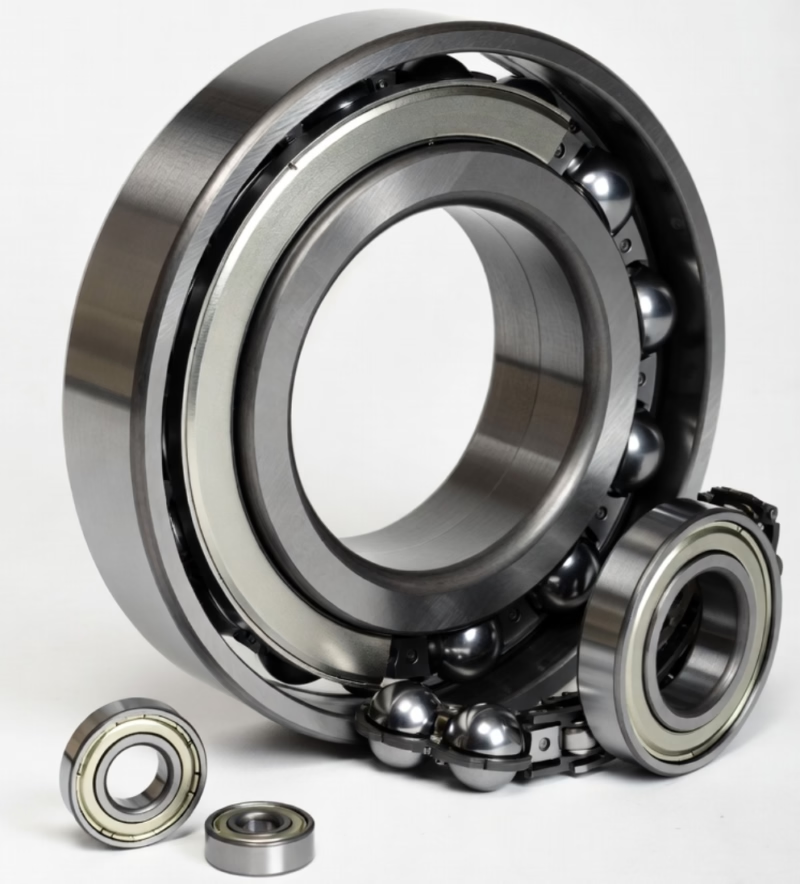
First, why do many cyclists consider upgrading to ceramic bearings, and where on a bicycle are they most suitable?
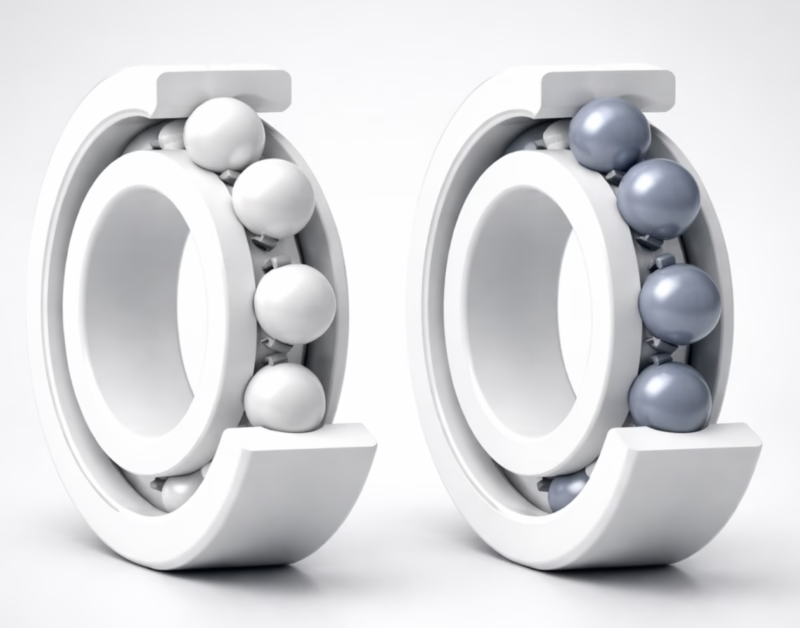
When we talk about ceramic bearings in cycling, we are usually referring to hybrid ceramic bearings. These are standard deep groove bearings where the balls are made of ceramic (typically silicon nitride), while the races remain steel. These ceramic balls usually appear gray with a shiny finish.
Pure white full ceramic bearings, on the other hand, are not suitable for bicycles, especially in high-load and impact-prone areas like hubs. If you really appreciate full ceramic bearings, they can be used in the freehub body, where they may help reduce friction slightly.
The Advantages of Ceramic Bearings — Reality vs Expectation
You’ll often hear that ceramic bearings offer:
- Corrosion resistance
- Lower weight
- Minimal thermal expansion
- Stability across temperature changes
- Electrical insulation
- High hardness and low deformation
- Self-lubrication (especially in vacuum environments)
However, these advantages primarily apply to full ceramic bearings.
For hybrid ceramic bearings, the benefits you actually get are:
- Slight weight reduction
- Slightly lower rolling resistance
These are the main reasons cyclists consider them—but even these gains come with trade-offs.
Bearing Clearance vs Rolling Resistance: The Trade-Off
Take a well-known ceramic bearing brand starting with “C” as an example. When servicing wheelsets equipped with these bearings, we found that bearing clearance was noticeably large.
(Bearing clearance standards include C2, CN, C3, C4.)
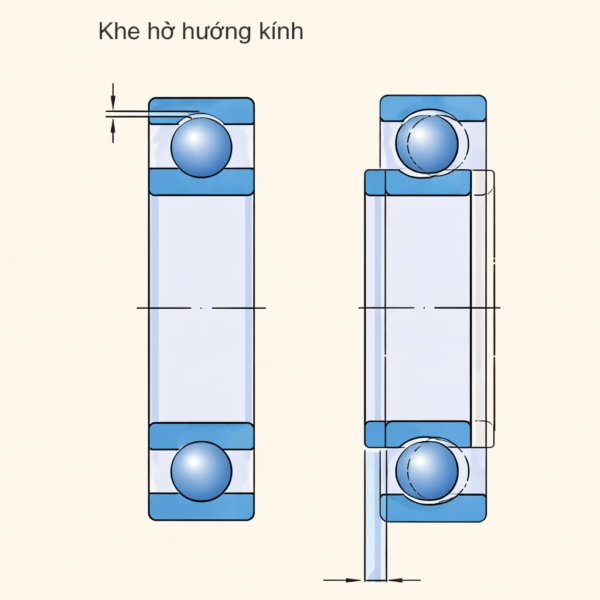
Such large clearance is not ideal for standard road bike wheelsets. The most direct result is slight lateral play, which becomes more noticeable as wheel diameter increases.
Interestingly, the manufacturer does not clearly specify the clearance standard. However, based on their strong emphasis on low rolling resistance, it is highly likely that they use larger clearance tolerances—one of the ways to reduce friction.
Why Do Some Wheels Have Play While Others Don’t?
Not all wheels show the same behavior, due to:
- Clearance variations within the same standard
- Manufacturing tolerances between hub and bearing
- Installation pressure differences
In extreme cases, a bearing may feel smooth before installation but develop gritty resistance after being pressed in, due to tight hub tolerances compressing the bearing.
This explains why some wheels develop play while others do not.
That said, properly selected clearance should not result in noticeable play.
What Clearance Is Actually Suitable for Bicycles?
From our discussions with bearing manufacturers:
- Most bicycles use CN (standard clearance)
- Occasionally C2 (slightly tighter)
- Rarely anything larger
While larger clearance reduces rolling resistance, it also introduces:
- Lateral play
- Increased likelihood of disc brake rub, especially on modern disc road bikes
Because of frame flex and axle deflection, even small clearances can become amplified.
Where Are Low-Friction, High-Clearance Bearings Actually Useful?
Bearings with larger clearance and lower resistance are better suited for:
- Small wheels
- Balance bikes
- Derailleur pulleys
- Bottom brackets
In these applications, they:
- Avoid excessive play
- Still deliver lower rolling resistance
How to Check Bearing Clearance Yourself
If the clearance is not specified:
- Remove both seals
- Clean the bearing thoroughly
- Shake it quickly
You can roughly feel the clearance level. Bearings rated C3 or higher will show noticeable looseness.
Do Ceramic Bearings Really Reduce Friction?
Yes—but it depends on the situation.
To highlight lower friction, many ceramic bearings use:
- At least one non-contact seal
This reduces friction but also lowers:
- Water resistance
- Dust protection
In wheel hubs, a common setup is:
- Outer side: contact seal (better protection)
- Inner side: non-contact seal (lower friction)
Real-World Comparison: Ceramic vs Steel Bearings
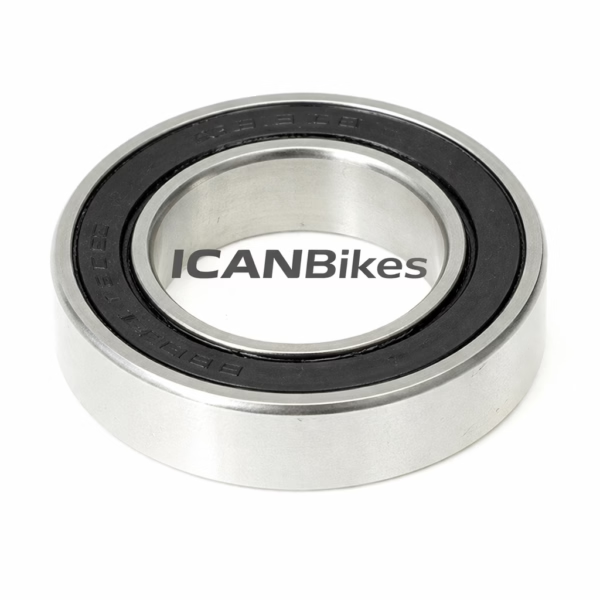
If you remove seals and clean both ceramic and steel bearings:
- It’s very difficult to feel any difference by hand
Advantages of ceramic bearings only become noticeable at high speeds, due to:
- Lower mass → reduced centrifugal force
- Less thermal expansion
- Lower deformation
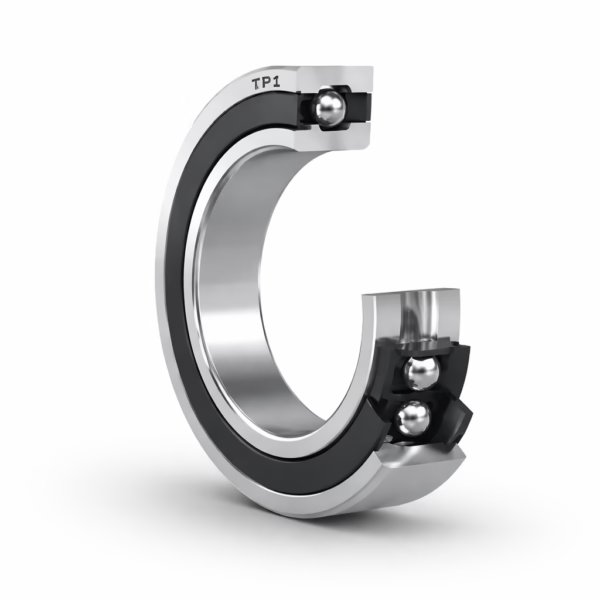
Why Ceramic Bearings Offer Minimal Gains on Bicycle Wheels
Let’s look at real numbers:
- 700c wheel circumference ≈ 2.2 meters
- At 100 km/h → ~757 RPM
- At 30 km/h → ~227 RPM
This is clearly low-speed operation.
So the friction advantage of ceramic balls is negligible in real cycling conditions.
What Actually Affects Rolling Resistance More?
More impactful factors include:
- Seal friction
- Lubricant viscosity
- Contamination
A more cost-effective way to reduce resistance:
- Slightly modify seals (reduce contact)
- Replace grease with lower-viscosity lubricant
However, this comes at the cost of:
- Reduced durability
- Less protection
Bearing Maintenance: Should You Open and Service Them?
Our answer: No (for most riders).
Proper maintenance requires:
- Complete disassembly
- Full solvent cleaning
- Degreasing
- Air drying
- Dust-free environment
This process should be repeated at least twice.
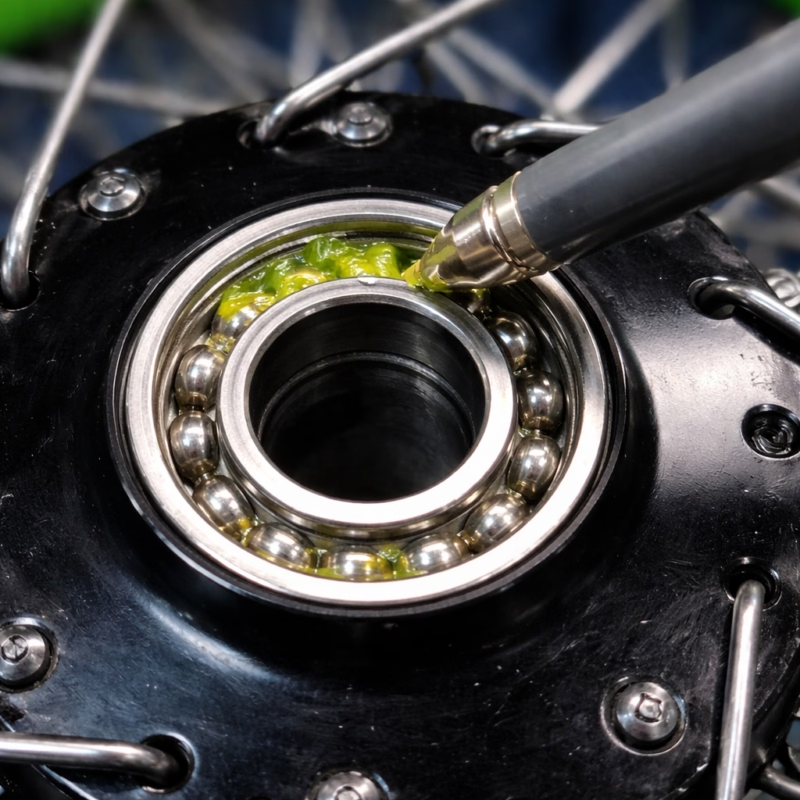
Common Mistake: “Quick Lubing” Bearings
Many people:
- Open one seal
- Add oil directly
- Leave the bearing in place
This is not proper maintenance and often leads to:
- Contamination
- Rapid wear
- Permanent damage
When Should You Replace Bearings?
- If the bearing is smooth → leave it alone
- If it feels dry or gritty → replace it directly
Cleaning will not restore smoothness once damage has occurred.
Final Thoughts from ICANBikes
Ceramic bearings are not a magic upgrade.
For most riders:
- Gains are minimal in real-world conditions
- Trade-offs include durability and sealing performance
In many cases, optimizing:
- Lubrication
- Sealing
- Bearing quality
will deliver better value than switching to ceramic bearings.