
How much difference is there in rim width between road bikes and gravel bikes?
How much difference is there in rim width between road bikes and gravel bikes?

Let’s go back to the era when the vast majority of road bikes still used rim brakes and gravel bikes wheelset hadn’t even been invented. Back then, rim width was rarely noticed. However, in recent years, rim width has become a very important detail that cyclists pay close attention to when buying a new bike, new wheels, or swapping various tires.
In the past, people often believed that narrower tires were faster, so very few rims supported tires 28 mm and wider. In any case, rim width was inherently limited by the distance between the brake calipers. This situation continued happily until a series of revolutionary technologies arrived.
First, the emergence of disc brakes quickly freed rim design from the constraint of brake pad width while still maintaining sufficient braking surface area. Second, developments in physics and aerodynamics made people realize that wider rims and tires could produce lower aerodynamic drag and lower rolling resistance. Finally, people’s riding styles and the attributes they valued began to shift. As interest in grip, comfort, and wider gravel tires grew, suddenly everyone wanted wider tires. To meet this demand, rims also became progressively wider.
Nowadays, rim width is no longer just a measurement—it’s a selling point. Rim width has become a key factor when buying a bike or upgrading a wheelset. Below, let’s explore what rim widths are most suitable for road bikes and gravel bikes.
How to measure rim width:
Rim width includes inner width and outer width. Inner width is far more important than outer width. You can simply measure the distance between the rim walls to get the inner width. For hooked rims, this is the distance between the bead hooks that secure the tire; for hookless tubeless rims, it’s the distance between the rim walls at the bead seat position.
Although outer width doesn’t affect tire compatibility, it still influences overall aerodynamics. Measure the widest point between the rim walls to determine the outer width.
Besides direct measurement, you can also check the rim’s ISO (International Standards Organization) or ETRTO (European Tyre and Rim Technical Organisation) designation. The first number is the BSD (Bead Seat Diameter). For 700c rims, the BSD is generally 622 mm. The second number represents the inner width. Inner widths range from just over 10 mm on older road rims to over 20 mm on the latest carbon rims. Gravel and mountain bike wheels rims can be significantly wider.
In recent years, experienced riders have moved from 23 mm tires to the now-common 30 mm tires. Wider tires bring better grip, comfort, and safety, so many road bikes now position 28–32 mm tires as the standard. Even for older-generation riders, 28 mm is quickly becoming the new normal.
To accommodate these wider tires, the ideal inner rim width is 18–23 mm. When the rim is slightly wider than the tire by a few millimeters, you can achieve the best aerodynamic performance without adding extra weight. This combination makes riding faster and smoother. Want to know why? Let’s dive in!
Rim width and aerodynamics

Aerodynamics directly determines whether a bike can go faster. To maximize aerodynamic efficiency, you must consider the combined shape of the rim and tire. When the rim is slightly wider than the tire, you generally get better aerodynamic benefits—this is very important. The old mindset was that tires ballooned out like a balloon sitting on the rim. However, this setup has been proven to create poor airflow. In contrast, when the rim is about 1 mm wider and slightly envelops the tire, the overall profile becomes much cleaner (more aerodynamic). Achieving this was easy with 23 mm tires, but as riders switched to wider tires for better comfort and performance, rim widths struggled to keep up.
Fortunately, disc brakes gave rim designers much more freedom. Combined with advanced carbon layup techniques, many modern road rims now reach 30–32 mm outer width, perfectly suited for 28–30 mm tires. Some brands, like Hunt, even add extra width to the rim walls to increase the difference between rim and tire.
Other factors
Besides aerodynamics, rim width also affects tire shape. Although a tire’s nominal width is close to its inflated maximum width, the actual mounted width can vary by several millimeters depending on the rim used. Using the ideal rim width gives the tire a rounder, more optimal profile instead of a bulbous “lightbulb” shape. A wider rim results in a tire with greater air volume (more aerodynamic), gentler corner radii, and less deformation under load, making the tire more comfortable and faster.
Rim width, tire air volume, and what pressure to run
In recent years, riders have realized that higher tire pressures make the tire feel faster due to stiffness, but in reality, overly high pressure reduces shock absorption and actually slows you down. As a result, people started using lower pressures, which accelerated the shift toward wider rims. Unfortunately, very narrow 23 mm tires have so little air volume that they can’t become supple even at lower pressures. If you want to run lower pressures, it’s best to switch to 25–32 mm tires. This trend toward wider tires has caused even entry-level wheelsets to increase inner width by several millimeters over the past decade to accommodate them.
Matching tire width to rim width

Indeed, almost any tire width can be mounted on a rim of the corresponding diameter (e.g., 700c, 26″, 29″). However, that doesn’t mean every tire is suitable for an old rim. Generally speaking, wider tires pair better with wider rims. Imagine inflating a balloon: think of how the knot at the bottom is formed—that’s similar to mounting a very wide tire on a narrow rim. You do get a rounded shape, but how does it ride? Now think of a car tire: the tire width and wheel width are almost the same—a very stable combination. Finally, imagine the opposite: mounting a narrow 23 mm tire on a modern wide road wheelset. When hitting a pothole, the narrow tire loses sidewall support and flattens dramatically. This can damage the bead hooks and, in extreme cases, become dangerous. That’s why proper tire–rim pairing is so important.
Unfortunately, there’s still no quick, universal formula for matching rims and tires because even tires of the same stated width can vary in real measurements. As a rough guide: if you want to use wider tires (e.g., 28–32 mm), look for a wheelset with 17–22 mm inner width. If you prefer narrower tires (e.g., 23–28 mm), keep the inner rim width in the 14–17 mm range.
A note about hookless rims
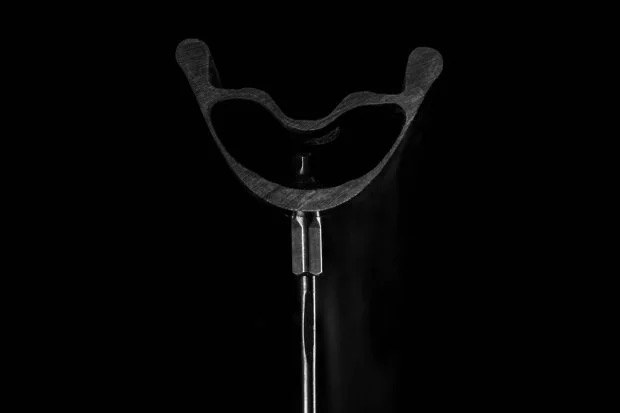
Hookless rims have no traditional bead hooks to secure the tire bead. This makes the wheelset lighter and stiffer, and we’ll likely see more hookless tubeless-specific rims in the future. Importantly, hookless rims are not as tolerant of tires wider than the rim itself. That’s why you must always check compatibility between a hookless rim and your intended tire before use.
What is the best rim width for gravel bikes?

Choosing a rim width for a gravel bike can be more complex. Since virtually all gravel bikes use disc brakes, there’s no reason not to go wider. If your current tires are 33–38 mm wide, most standard road rims will no longer be suitable; instead, you’ll need gravel-specific wheelsets, which typically have 20–26 mm inner width. When using tires 40 mm and wider—or even more MTB-like tires—you’ll want even wider rims for better support and stability, especially at lower pressures.
If you want your gravel bike to be a true “do-it-all” machine, an inner width of 21–23 mm is an excellent sweet spot. It can handle 28 mm road tires as well as more aggressive gravel tires.
